

In today's era of lean manufacturing, PVC injection molding efficiency improvement has become a constant goal for manufacturers. Do you wish to master the secrets of micro injection molding optimization and elevate your injection molding process to maximum efficiency? This article provides practical guidelines on molding process optimization and related high-efficiency production techniques to ensure you stay ahead in the fiercely competitive market.
Regardless of your company's size, these strategies can help you achieve cost control and production capacity breakthroughs while ensuring product quality. Through meticulous management of materials, equipment, and process parameters, achieving the ultimate in injection molding efficiency is no longer an unattainable dream. Now, let us explore together how to break through traditional boundaries and transform your PVC production line into a high-performance production force.
Key Takeaways
- Gain a deep understanding of PVC micro injection molding technology and its industrial applications.
- Master how to improve overall PVC injection molding efficiency through process improvements.
- Learn the key steps in selecting and processing PVC raw materials to ensure high-quality final products.
- Understand the characteristics of different injection molding machines and make informed choices based on actual needs.
- Adjust key molding parameters to optimize production processes.
- Understand the importance of continuous quality control and data analysis for improving production efficiency.
- Implement waste management strategies for energy conservation and emission reduction and sustainable production practices.
PVC Micro Injection Molding Overview
In today's rapidly developing plastics industry, PVC injection molding introduction is crucial for understanding various plastic product manufacturing processes. You may already be familiar with traditional injection molding, but micro injection molding technology is increasingly becoming a rapidly growing market segment, specifically designed for the production of small-batch, precision components.
Unlike standard injection molding, micro injection molding is a specialized manufacturing technique designed specifically for producing micro-sized, precision plastic components. This technology is well-suited for producing medical devices, micro connectors, and precision engineering components. Micro injection molding requires extremely high precision, and the injection molding process involved must be strictly controlled to ensure product consistency and quality.
Understanding the differences in the PVC micro injection molding process is essential for developing effective production plans, selecting appropriate equipment, and maintaining product quality. The table below compares the main differences between micro injection molding and traditional injection molding in terms of process, manufacturing technology, and application scope.
| Manufacturing Process | Micro Injection Molding | Traditional Injection Molding |
|---|---|---|
| Mold Size | Small molds, fine details | Standard to large molds |
| Material Usage | Micro amounts of plastic, reduced waste | Larger material volumes |
| Production Speed | Slower, emphasis on quality and precision | Fast, suitable for mass production |
| Application Scope | Medical components, micro electronic components | Automotive parts, household items, etc. |
With technological progress and changing market demands, PVC micro injection molding will continue to evolve, becoming an indispensable part of high-quality precision product manufacturing. Familiarizing yourself with this process will help you maintain an advantageous position in the competitive market.
The Importance of High-Efficiency Injection Molding
In today's fiercely competitive manufacturing industry, improving injection molding efficiency is an important factor in maintaining competitiveness. It not only accelerates production cycles to achieve maximum production performance but also helps enterprises achieve significant results in cost control and product quality improvement. Meanwhile, high-efficiency injection technology plays an equally critical role in reducing energy consumption during constant-temperature molding processes, supporting environmental sustainability.
The table below lists several key considerations for implementing high-efficiency injection technology and how they positively impact production and operations:
| Improvement Item | Benefit | Implementation Method |
|---|---|---|
| Accelerate Production Cycles | Shorten time-to-market | Optimize machine action processes |
| Precision Temperature Control | Improve product consistency and quality | Use advanced sensors and controllers |
| Optimize Energy Utilization | Reduce operating costs | Adopt high-performance machines and energy-saving technology |
| Automation and Robotics | Improve production flexibility and efficiency | Integrate smart manufacturing systems |
Material Preparation: Ensuring PVC Quality
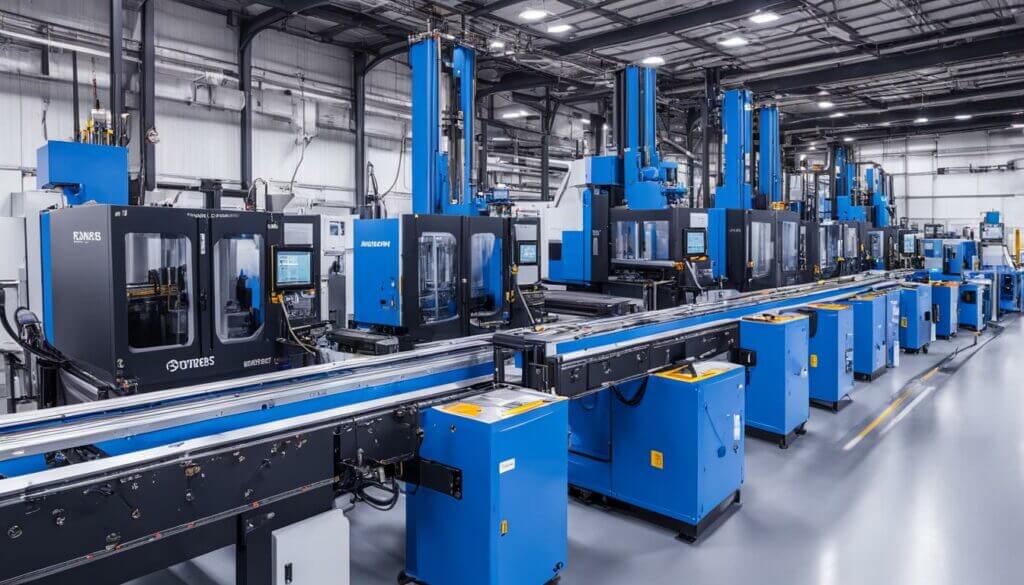
In the PVC micro injection molding process, PVC material preparation is the primary step in ensuring final product quality. Through rigorous material handling procedures, we can effectively ensure the purity and processing suitability of PVC raw materials, thereby achieving quality assurance. Below are some key step recommendations to help you achieve high-quality molding results.
First, PVC raw materials must undergo careful drying treatment to remove any moisture that could affect the molding process. Second, the mixing step produces a uniform and consistent material, which not only affects material flowability but also has a significant impact on the mechanical properties and surface finish of the finished product. Additionally, appropriate pretreatment can further improve material processing performance, thereby reducing defects in the molding process.
The table below summarizes some best practices for material handling:
| Processing Step | Purpose | Expected Result |
|---|---|---|
| Drying Treatment | Eliminate moisture | Improved molding quality, prevention of air bubbles and shrinkage |
| Material Mixing | Ensure material uniformity | Improved flowability, enhanced mechanical properties |
| Pretreatment | Enhance processability | Minimize process defects |
Selecting the Right Injection Molding Machine
When selecting an injection molding machine, you need to consider product specifications, material characteristics, and production requirements to ensure the selected model matches your needs.
Product specifications — the compatibility with injection machine performance is key. You need to evaluate the product's dimensions, shape, and required precision, and match them with the machine's clamping force, injection pressure, and volume parameters.
Additionally, material characteristics — such as the melting points and viscosities of different plastics like PVC, ABS, PP — will directly affect your injection molding machine selection decisions.
Of course, production requirements are also a factor that cannot be overlooked. You need to estimate production volumes and consider the machine's operational efficiency and reliability when selecting, choosing appropriate equipment based on product batch sizes. Energy efficiency and maintenance costs are also essential factors to consider when selecting an injection molding machine.
Here is a reference table evaluating injection machine performance versus energy consumption ratio for your informed molding machine selection:
| Machine Model | Clamping Force (tons) | Injection Pressure (MPa) | Injection Speed (mm/s) | Energy Consumption (kW) |
|---|---|---|---|---|
| Model A | 200 | 180 | 90 | 25 |
| Model B | 300 | 160 | 100 | 30 |
| Model C | 150 | 170 | 95 | 20 |
Optimizing Injection Parameter Settings
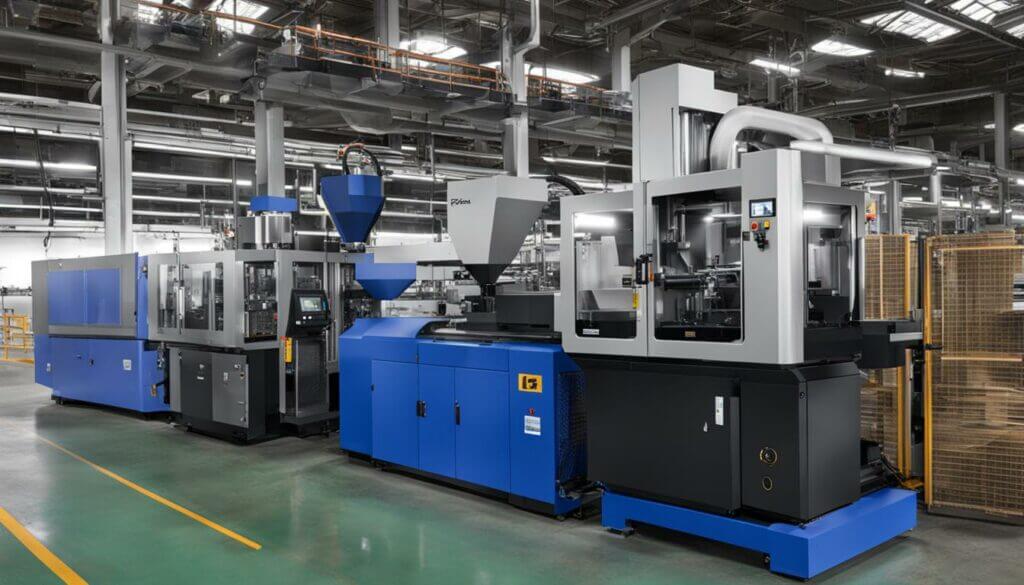
In the injection molding process, accurate control of injection molding parameters is crucial for achieving high-quality products. Moreover, through process parameter optimization, you can effectively shorten molding cycles while reducing material and energy waste. These key parameters include injection speed, pressure, and temperature control, all of which directly affect the appearance and performance of the finished product.
Below is an injection molding parameter table focused on key parameter adjustments, helping you better understand the impact of each parameter on final product quality:
| Parameter Category | Objective | Influencing Factor | Adjustment Guide |
|---|---|---|---|
| Injection Speed | Improve production efficiency | Mold design | Adjust based on cavity size and shape |
| Injection Pressure | Improve product quality | Plastic viscosity | Set according to material flowability |
| Holding Time & Pressure | Reduce finished product defects | Product thickness | Increase or decrease appropriately to avoid shrinkage or flash |
| Barrel Temperature | Uniform material flow | Material characteristics | Adjust temperature based on melt flow rate |
| Mold Temperature Control | Ensure product dimensional stability | Cooling system efficiency | Maintain constant and meet material requirements |
To achieve this optimization, you need to continuously experiment, collect data, and make adjustments based on product requirements and material characteristics. Data-driven decision-making will help you more precisely master these process parameters and find the optimal settings for your production line.
The Impact of Mold Design and Maintenance on Molding
In the micro injection molding process, mold design optimization and mold maintenance are key factors determining molding quality. A well-designed mold can improve product precision and surface quality, while proper maintenance can extend mold life, prevent unexpected downtime, and ensure product output consistency. Let us delve deeper into how these factors affect molding quality.
| Mold Design Factor | Impact on Molding Quality |
|---|---|
| Mold Material Selection | Wear resistance and thermal conductivity directly affect product surface smoothness and dimensional stability. |
| Cavity Layout | Directly affects material flow, filling, and product cooling rate within the mold. |
| Cooling System Design | Uniform cooling reduces product warpage and internal stress, improving molding quality. |
| Venting Design | Effective venting prevents air bubbles and burn marks, ensuring overall molding quality consistency. |
Beyond the design factors mentioned above, mold maintenance is also an essential aspect. Regular inspection of mold fasteners, lubrication systems, cleaning of cavities and venting holes, and repair of damaged or worn parts are all important tasks for ensuring mold performance and stable production of high-quality products.
Achieving Precision Injection: Key Technical Points
On the path to improving precision injection molding, you can witness firsthand how technology is rewriting the future of the micro injection molding industry. For example, breakthroughs in micro injection molding technology give designers greater freedom while preserving the fundamental precision of the injection molding process. Additionally, combined with the latest servo drive systems and software controls, these technologies greatly enhance the stability and reproducibility of the entire molding process.
When we discuss molding precision, it means that every product's dimensions, shape, and texture must achieve near-perfect consistency. Below are the key elements used to ensure this precision:
| Technology | Function | Impact on Molding Precision |
|---|---|---|
| Servo Drive System | Precise control of injection speed and pressure | Improves product consistency, reduces deformation |
| Real-Time Monitoring Software | Tracks data during the molding process | Enables real-time parameter adjustments, reduces defect rate |
| Precision Temperature Control | Maintains uniform cavity temperature | Ensures uniform plastic flowability and cooling rate |
| Micro Metering Device | Precisely controls plastic injection volume | Achieves high-precision molding of micro components |
Quality Control and Process Monitoring
In the plastic injection molding industry, a quality management system is key to ensuring products meet high standards. Your enterprise may have already noticed that any defect in the production process can lead to reduced productivity and increased costs. Therefore, implementing proactive production process monitoring strategies is crucial. This not only aids in defect prevention but also enables timely corrections before problems occur, safeguarding product quality and consistency.
Let us examine some practical measures:
- Real-time monitoring of production data to identify trends in non-conforming product production.
- Through automated quality inspection systems, promptly eliminate anomalies on the production line.
- Using predictive maintenance technology to proactively resolve issues before equipment failures occur.
Reducing Waste: Scrap Management Strategies
In modern production processes, reducing production waste has become an important means for enterprises to enhance competitiveness. Particularly in the PVC injection molding industry, effective scrap recycling not only reduces material costs but also demonstrates environmental responsibility, implementing the principle of energy conservation and emission reduction. Here, we introduce some practical strategies to help you achieve sustainable production. First, through process improvements, optimize the production process to reduce raw material consumption and waste generation.
Furthermore, implement a circular recycling program where generated waste is sorted, cleaned, and reprocessed to return to the production line. Beyond direct reuse, you can explore converting waste into other valuable products, such as building materials or furniture, which not only creates new revenue streams for the enterprise but also reduces the demand for new raw materials.
The table below provides an overview of effective waste treatment technology comparisons:
| Waste Treatment Method | Cost | Benefit | Applicable Scope |
|---|---|---|---|
| Physical Recycling and Reuse | Low | Reduces raw material consumption, saves costs | Leftover materials from the production process |
| Chemical Recycling | High | Converts into raw materials or other products | Waste difficult to physically recycle |
| Energy Recovery | Medium | Converts waste into heat or electricity | Waste with high heat value |
The waste management plan implemented in your enterprise should be adjusted according to your specific production characteristics and waste types. Valuing waste as a resource and actively seeking recycling solutions is not only beneficial for the environment but also enhances the overall efficiency of the enterprise.
Production Efficiency Analysis and Improvement
In today's fiercely competitive market, production efficiency improvement is not only about cost control — it is the cornerstone of sustainable enterprise development. Conducting in-depth efficiency analysis, identifying efficiency bottlenecks in the production process, and achieving optimization through continuous improvement are key steps to enhancing competitiveness.
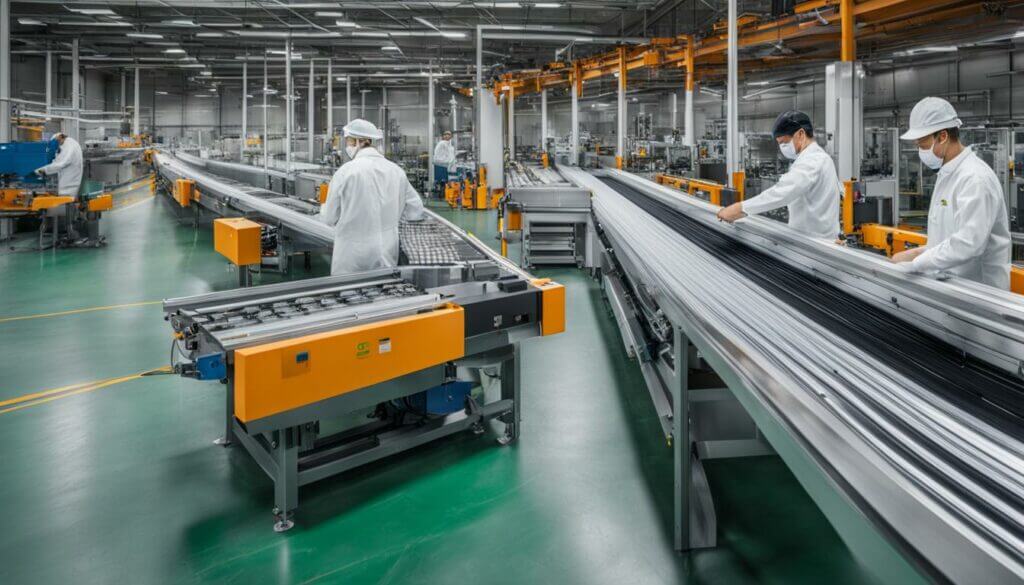
Effective efficiency improvement often begins with detailed data analysis. By collecting and analyzing data to pinpoint the sources of efficiency losses, actionable optimization plans can be formulated. Below describes the key ways to combine data analysis with improvement plans:
| Improvement Area | Analysis Metrics | Improvement Strategy |
|---|---|---|
| Equipment Maintenance Plan | Equipment failure rate, repair time | Develop preventive maintenance plans to reduce unexpected failures |
| Production Scheduling Optimization | Product delivery time, scheduling efficiency | Use software tools for schedule simulation, improve scheduling rationality |
| Production Line Balance | Station operation time, line load | Redistribute production line resources, balance workloads |
A data-driven continuous improvement plan will drive the enterprise to a new level. Remember, continuous improvement is a never-ending cycle — only by constantly pursuing progress can you maintain an advantage in future market competition.
Employee Training and Team Collaboration
In the competitive injection molding industry, employee skill development and team collaboration are key to achieving process optimization. Through targeted education and training, employees can not only master advanced injection molding techniques but also effectively apply these skills in daily work, thereby strengthening the efficiency of the entire production line.
To achieve this goal, the capability development of every team member should not be overlooked. When team members can learn from each other and share experiences, it not only improves individual skills but also facilitates collaborative operations between teams. Therefore, training programs should include team building and communication skills development to achieve a good collaborative atmosphere.
| Training Program | Objective | Expected Benefit |
|---|---|---|
| Injection Molding Technology | Proficient machine operation | Improved production stability and efficiency |
| Quality Management | Prevent and solve production issues | Reduced defect rate |
| Team Communication Skills | Strengthen team collaboration | Faster problem resolution |
| Environmental Protection & Sustainability | Promote environmental awareness | Enhanced corporate image and social responsibility |
Additionally, through cross-departmental training and exchange activities, employees can gain a more comprehensive understanding of each stage of injection molding — from material handling to finished product shipment. Optimization of each step is the cornerstone for improving overall productivity. In your pursuit of continuous process improvement, investing in talent development and team spirit should be a top priority.
Environmental Protection and Sustainable Development Practices
In today's plastics manufacturing industry, eco-friendly production has become an important mission. It requires enterprises to actively seek carbon reduction initiatives and implement sustainable development strategies to promote environmental protection. Moreover, these measures have a significant impact on strengthening brand image and meeting consumer and regulatory expectations.
To implement this transformation, one strategy is to adopt biodegradable materials to replace traditional plastics. These materials can be naturally decomposed after disposal, greatly reducing environmental pollution. On the other hand, improving energy efficiency and reducing waste emissions in the production process are also effective approaches to achieving eco-friendly production.
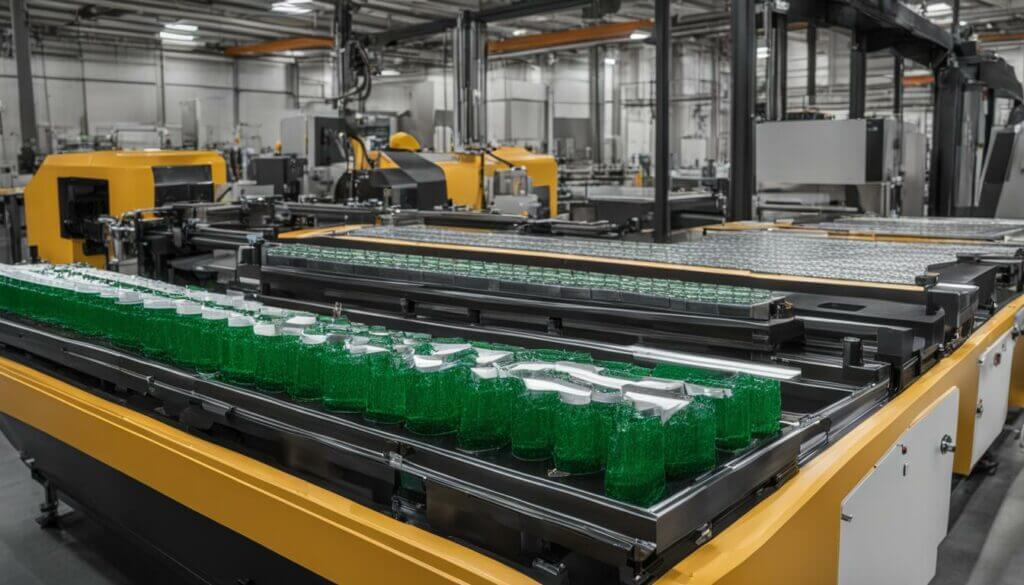
| Environmental Measure | Benefit | Implementation Method |
|---|---|---|
| Use Biodegradable Materials | Reduce environmental pollution | Select market-certified biodegradable plastics |
| Improve Energy Efficiency | Reduce energy consumption | Invest in energy-saving equipment and optimize production processes |
| Waste Reduction and Recycling | Reduce material costs and environmental impact | Design effective waste management systems |
Through the above measures, you can not only enhance the enterprise's sense of responsibility in the eco-friendly production field but also establish a strong carbon reduction initiative image in the market, opening up new business horizons and realizing the long-term vision of sustainable development strategies.
Case Studies: Successful Application Examples
Case studies are an excellent way to understand industry best practices. This section will analyze how some enterprises have become technology leaders through successful application, providing insights and methods that others can emulate. We will see how the efficiency improvements and cost savings achieved by these companies, through continuous innovation and improvement, have set them apart.
Companies that achieve success in the PVC injection molding industry typically excel in several areas: precise mold design, optimized production processes, selection of high-quality raw materials, and active investment in employee training and technological innovation. The table below provides a more specific demonstration of how these key points have been successfully applied in real cases:
| Success Case | Key Strategy | Implementation Result |
|---|---|---|
| Company A | Introduced automated production line | 30% increase in production efficiency |
| Company B | Strengthened quality management system | 15% decrease in product defect rate |
| Enterprise C | Implemented mold design optimization | 50% increase in mold lifespan |
| Group D | Trained employees, improved professional skills | 20% increase in overall factory operational efficiency |
The PVC injection molding success cases presented above fully demonstrate that by combining innovation with strategic analysis, PVC injection molding enterprises can achieve breakthroughs and lead industry trends even when facing intense market competition.
Conclusion
Through this article's discussion, you should have a clear understanding of how to improve PVC micro injection molding efficiency. Whether in material selection, equipment utilization, or management of molding process details, the implementation of production best practices is crucial for producing high-quality products.
Furthermore, this article has provided a series of strategies and techniques to help you optimize every aspect of the injection molding process, ensuring not only high-efficiency production but also creating greater economic benefits for the enterprise. Looking ahead, future outlook and technological innovation will continue to advance the injection molding industry, and if your enterprise can seize these changes, it will gain a competitive advantage in the industry.
In summary, in this rapidly changing market, mastering and implementing the methods mentioned in this high-efficiency injection molding summary will be the key to your continued success. Looking forward, we anticipate seeing more innovative initiatives driving the injection molding industry toward greater achievements.