

Have you ever tried walking your energetic dog in the park, only to have them rocket off after a squirrel, nearly dislocating your arm? Or been in a training session where your dog was excitedly spinning in circles while the ordinary leash in your hand was completely useless? These everyday struggles of dog owners might be exactly what you face daily.
Choosing a good leash is as important as picking a pair of well-fitting shoes for yourself. Think about it — you wouldn't go mountain climbing in flip-flops, right? Similarly, training your dog with an unsuitable leash will naturally produce diminished results. Today, let's talk about how to choose the most suitable training leash for your furry friend, turning your training sessions from disasters into enjoyable interactive moments.
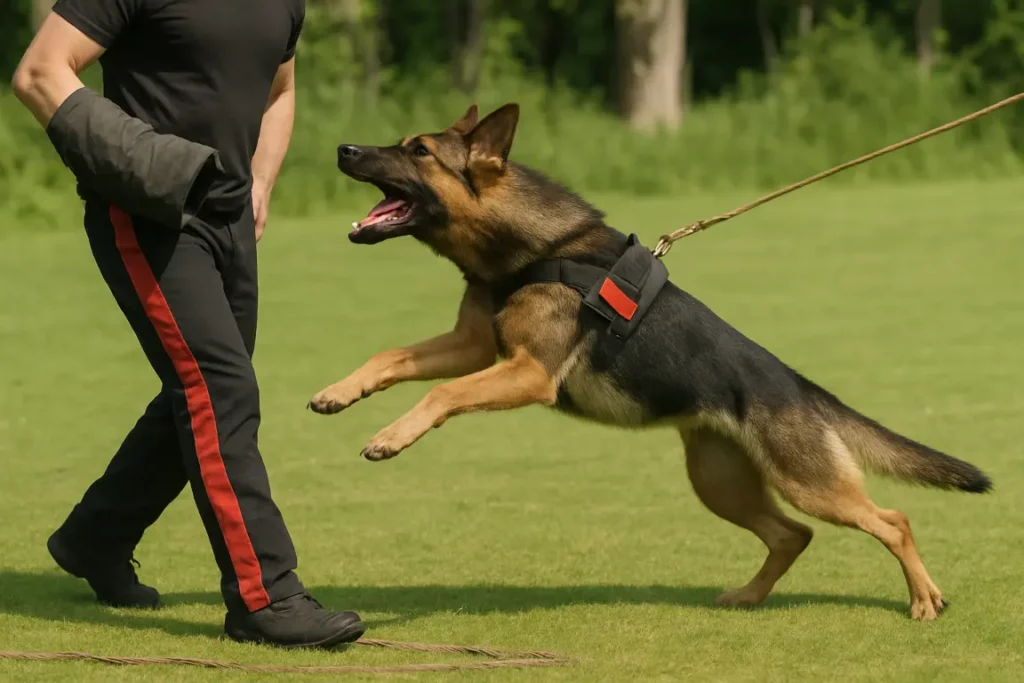
Why Regular Leashes Don't Cut It
You might think, "It's just a rope — what's there to be particular about?" But the truth is, that ordinary leash you casually picked up at the pet store often causes headaches during training. Just as you wouldn't use a kitchen knife to trim your nails, every tool has its appropriate occasion.
Basic retail leashes have these notable drawbacks during training:
Insufficient Control: When your dog sees another dog or catches a scent and wants to dash over, an ordinary leash simply can't hold them back, let alone precisely control their movements. Sometimes what you need is a tool that can deliver clear commands in an instant, not the helpless feeling of being dragged along by your dog.
Lack of Durability: Active dogs are quite strong, and with their frequent pulling and chewing on the leash, standard materials wear out quickly. My friend's Golden Retriever, for instance, destroyed two regular leashes in three months. He finally bought a climbing rope to use — not the prettiest, but at least it was tough enough.
Lacking Professional Features: Different stages of training require different tool characteristics, such as adjustable length, shock-absorbing design, or special handles, which are typically absent from basic leashes.
Key Features for Choosing a Training Leash
| Leash Type | Material | Suitable Size | Suitable Training Goal | Length | Pros | Cons |
|---|---|---|---|---|---|---|
| Basic Leash | Nylon | Small to Medium Dogs | Basic Obedience Training | Approx. 1.5m | Affordable, lightweight, waterproof | Insufficient control, limited durability, edges may be rough on hands |
| Leather Leash | Genuine Leather | Medium to Large Dogs | Basic Obedience Training, Daily Use | Approx. 1.5m | Comfortable grip, conforms with use, premium look | Easily damaged by water, requires regular maintenance, higher price |
| Rubber-Reinforced Leash | Rubber-Reinforced Fiber | Large Dogs, Strong Breeds | Strength Control, High-Intensity Training | Approx. 1.5-2m | Combines elasticity with durability, high strength, chew-resistant | Higher price, some dogs may be sensitive to rubber smell |
| Adjustable Length Leash | Nylon/Various Materials | All Sizes | Multi-Stage Training, Flexible Control | Adjustable (typically 1-3m) | Length adjustable per need, multi-purpose, adapts to different training stages | Adjustment mechanism may wear over time, heavier weight |
| Long Training Leash | Nylon/Climbing Rope | All Sizes | Recall Training, Long-Distance Control | 5-10m | Provides greater activity space for dogs, ideal for outdoor open environments, excellent for recall training | Easily tangled, inconvenient to carry, not suitable in crowded environments |
Material Strength
Material is the primary factor determining a leash's lifespan. Imagine if the leash you use were as fragile as tissue paper, snapping at a single hard pull from your dog — that's not just dangerous but could also cause accidents. Common materials on the market include nylon, leather, and rubber-reinforced fiber, each with its own pros and cons:
Nylon: Lightweight, waterproof, and affordable, but edges can be somewhat rough and will wear on hands with prolonged use. Like the athletic shoes we commonly wear — light and practical but with limited durability.
Leather: Comfortable grip that becomes more supple with use, but is easily damaged by water and requires regular maintenance. A bit like a wallet that gets better with age, but you need to be extra careful on rainy days.
Rubber-Reinforced Fiber: Combines elasticity with durability, suitable for strong dogs, but is more expensive and some dogs may be sensitive to the rubber smell.
Stitching Quality
Don't underestimate those inconspicuous stitches — they're often where leashes fail first. Quality training leashes should use double or triple stitching to ensure they won't come loose even under high stress. Just like buying clothes — if the stitching is crooked and sloppy, you definitely wouldn't consider it. A leash's stitching is an even more critical safety detail.
Metal Hardware Durability
Clips, rings, and other metal hardware are another vulnerable point of leashes. Inferior metals rust, deform, or even break after some use. Imagine if you're crossing a street with your dog and the clip suddenly breaks — the consequences would be unthinkable. Quality training leashes should use stainless steel or alloy hardware to ensure they remain problem-free with long-term use.
Ergonomic Handle
Holding an uncomfortable leash for a long time will quickly make your hand ache. A good training leash should have an ergonomically designed handle, such as foam padding or contoured grip, allowing you to train for extended periods without hand fatigue. It's like choosing a keyboard or mouse — comfort makes a huge difference.
Length Selection
Different training purposes require different leash lengths. Basic obedience training typically requires a shorter leash (about 1-1.5 meters) for precise control, while recall training needs a longer leash (up to 5-10 meters) to give the dog enough activity space. Some advanced training leashes even offer adjustable length designs — one leash for multiple needs, like versatile transformable furniture that's both flexible and practical.
How to Choose the Right Training Leash Based on Your Needs
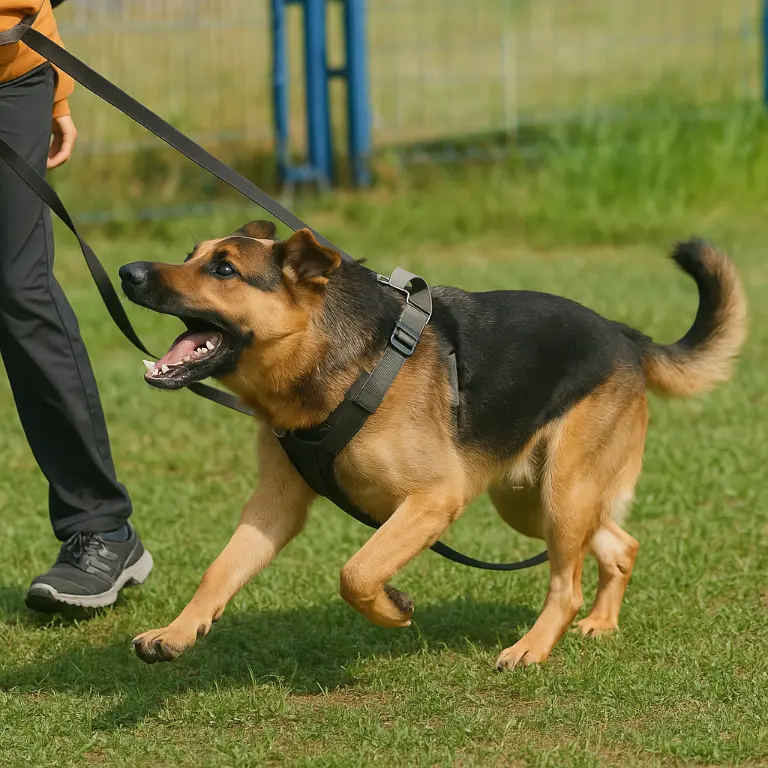
Based on Training Goals
Basic Obedience Training: If you just want to teach your dog basic commands like "sit" and "stay," a medium-length (approximately 1.5 meters), comfortable-grip basic leash will suffice. Just like learning to drive — you don't need to buy a race car right away. Beginner training doesn't require overly complex tools.
Agility Training: This type of training requires quick reactions and precise control. A lightweight leash with adjustable length is recommended, allowing you to flexibly adjust for different movements.
Service Dog Training: This is the most rigorous type of training, requiring high-quality, highly durable professional leashes, preferably with shock-absorbing design and robust metal hardware.
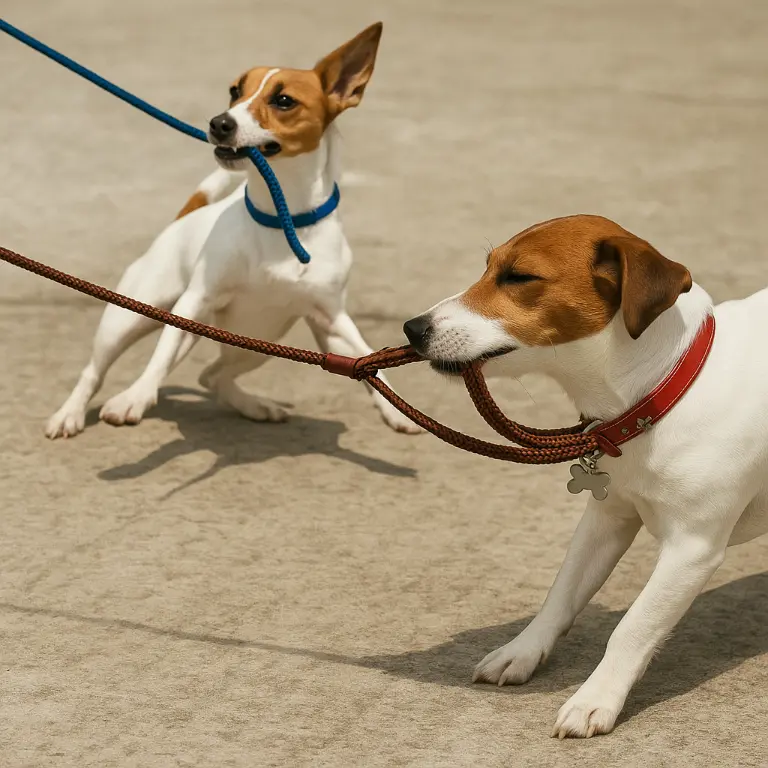
Based on Dog Size and Strength
Small Dogs (under 10 kg): You can choose lighter and thinner leashes. The focus should be on comfort and grip — there's no need to overemphasize durability.
Medium Dogs (10-25 kg): You need a balance of lightness and durability. A medium-strength nylon leash is recommended, preferably with a non-slip handle design.
Large Dogs (over 25 kg): Strength and durability must be the priority. Choose leashes with reinforced material and shock-absorbing design, with extra-sturdy metal hardware. Just like you wouldn't use a thin rope to pull a car, a large dog's strength demands corresponding tools.
Based on Usage Environment
Indoor Training: A shorter leash will do, and the material doesn't need to be specially waterproof or stain-resistant.
Outdoor Parks: A medium-to-long, easy-to-clean leash is recommended, preferably with reflective design for added safety.
Wilderness Training: Choose an ultra-durable, waterproof leash with sufficient length, ensuring good control of your dog even in open environments.
Based on Trainer Experience
Beginners: A basic leash that's simple to operate and comfortable to grip is recommended — the focus is on being easy to use without making mistakes. Just like when first learning to cook, you wouldn't buy a bunch of complex kitchen gadgets; start with the basics to get familiar.
Experienced Trainers: Consider more functional professional leashes, such as adjustable-length or specially designed control models.
Professional Trainers: Invest in high-quality professional training leashes. While the price is higher, they save money in the long run and provide the best training results.
| User Category | Training Purpose | Recommended Leash Type | Usage Environment | Other Considerations |
|---|---|---|---|---|
| Beginners | Basic Obedience Training | Basic leash (for small dogs); Leather leash (for medium dogs) | Indoor training venues or quiet parks | Easy to operate, low error potential |
| Experienced Trainers | Advanced Obedience, Flexible Control | Adjustable length leash, shock-absorbing leash | Various indoor and outdoor training settings | Balance of functionality and durability |
| Professional Trainers | Service Dog Training, Specialized Skills | Professional service dog leash, premium rubber-reinforced leash | Various professional training facilities, real-world work environments | High quality, durability, multi-functionality |
| Large Dog Owners | Strength Control, Preventing Pulling | Rubber-reinforced leash, shock-absorbing leash | Outdoor open spaces, parks | Durability, strength, hand protection |
The Importance of Leash Quality Assurance
When purchasing a training leash, quality assurance is absolutely essential. After all, this concerns not just training effectiveness but the safety of both you and your dog. Quality training leash manufacturers typically provide the following quality assurances:
Stitching Consistency: Every stitch should be even and secure, with no loosening or crookedness. Like mom's handmade dumplings — uniform size shows good craftsmanship, and leash stitching follows the same principle.
Flawless Materials: The material of a quality leash should have no visible flaws or weak points, with consistent overall thickness.
Securely Installed Metal Hardware: Clips, rings, and other metal hardware should be firmly installed without any loosening or deformation.
Handle Comfort: The handle should have good coverage and comfort, causing no discomfort even with prolonged use.
Making Your Final Decision
Choosing a suitable training leash is like selecting a reliable assistant — it will accompany you and your beloved dog through countless training sessions. While there are many options on the market with prices ranging from a few hundred to over a thousand dollars, remember: this is not just a purchase but an investment in the safety and training effectiveness for both you and your dog.
If your dog is still growing, you may need to prepare leashes for different stages. If they're already an adult, you can directly choose a style that suits their size and training needs. Regardless, choosing a product with quality assurance is always the right call.
As the saying goes: "A craftsman is only as good as their tools." A good training leash will be your best partner on the journey of training your beloved dog. We hope this guide helps you find the most suitable choice, making your training time with your furry companion filled with fun rather than frustration. After all, the purpose of training is not just to make your dog obedient, but to build mutual understanding and emotional connection between you.
One last reminder: even the best leash is only an auxiliary tool. True training results still come from your patience, consistency, and correct technique. So after selecting your leash, don't forget to also invest some time in learning proper training methods!