

In an era pursuing manufacturing efficiency and high-quality output, High Frequency Welding technology has become an indispensable tool for industry innovation. Through high-frequency heating technology, manufacturing process quality and speed have been elevated to unprecedented levels, particularly in fields such as medical device manufacturing and plastic welding where precision and efficiency are critically demanded, demonstrating the decisive role of professional manufacturing process technology in enhancing production competitiveness.
Through in-depth exploration of High Frequency Welding applications across different industries, this article aims to reveal the core driving force behind manufacturing process efficiency improvement — how High Frequency Welding technology is rewriting traditional manufacturing process standards and driving industrial production toward greater automation and intelligence.
The Key Position of High Frequency Welding Technology in Industrial Manufacturing
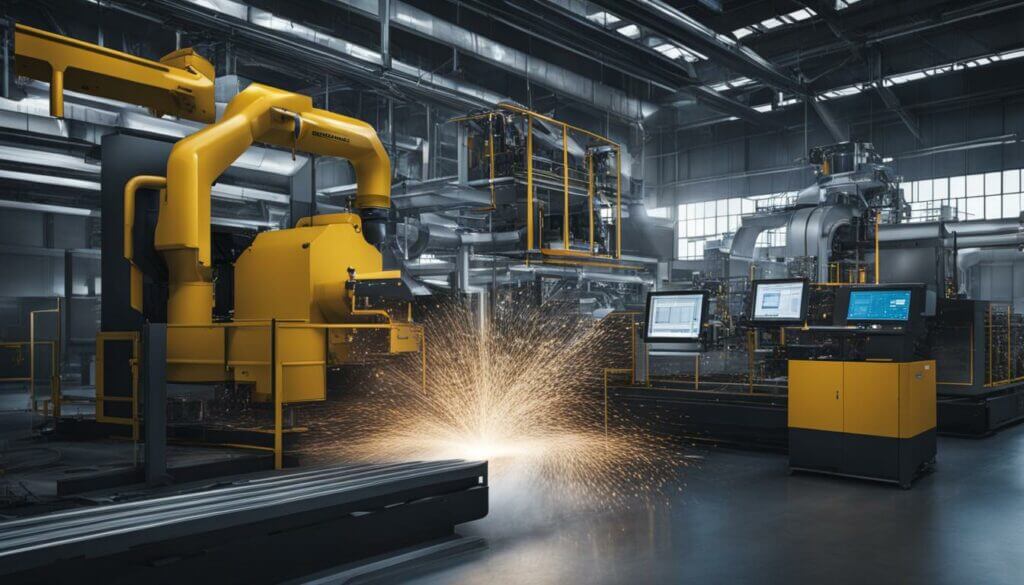
In the many fields of modern industrial production, High Frequency Welding technology has become a key element for enhancing manufacturing process precision and efficiency. From plastic welding to metal heat treatment to food processing, the breadth of High Frequency Welding technology applications makes its importance impossible to ignore. Below are several key industrial sectors that extensively utilize High Frequency Welding technology, fully demonstrating its core value in industrial applications.
| Industry Sector | High Frequency Welding Application | Efficiency Improvement Example |
|---|---|---|
| Plastic Welding | High frequency welding heats plastics for precision bonding | Fast welding speed, saves processing time, reduces material waste |
| Metal Heat Treatment | Uses high frequency heating for metal hardening and annealing | Improves metal strength and durability, meets high-standard production requirements |
| Food Processing | Applies high frequency for food preservation and sterilization | Extends food shelf life, ensures food safety |
| Medical Devices | High frequency cleaning innovative devices ensure sterile medical equipment | Enhances patient safety, improves medical service quality |
| Packaging Industry | High frequency plays a role in bonding and sealing packaging materials | Improves packaging puncture resistance and seal integrity, reduces costs |
With the help of these key manufacturing process technologies, various industries can significantly improve production efficiency while ensuring product quality, thereby maintaining competitiveness in a rapidly changing market. High Frequency Welding technology not only optimizes traditional manufacturing processes but also paves the way for new manufacturing methods. Its contribution to future manufacturing development is highly anticipated.
The Integration of GoWell Enterprise's Custom Products with High Frequency Welding

As modern consumers trend toward personalized and distinctive consumption patterns, GoWell Enterprise leverages cutting-edge High Frequency Welding technology to meticulously create custom products that meet market demands. The integration of High Frequency Welding in customization not only demonstrates its high efficiency in manufacturing processes but also significantly reduces material waste, achieving green and eco-friendly manufacturing.
In the field of corporate promotional gift production, the application of High Frequency Welding technology provides exceptional flexibility and precision, ensuring that promotional gifts not only possess highly personalized features but also guarantee smooth product lines and flawless design presentation. GoWell Enterprise leverages this technology to meet clients' dual pursuit of high quality and uniqueness.
By utilizing High Frequency Welding technology for plastic welding, metal processing, and more, GoWell Enterprise can create customized products tailored to each client, thereby optimizing production processes, streamlining labor and resources, and improving overall work efficiency. Whether for heat pressing, sealing, or forming processes, the precise control of integrated High Frequency Welding applications sets new standards for product quality.
Looking at market development overall, High Frequency Welding has brought revolutionary innovation to GoWell Enterprise's custom products not only at the technical level but also at the economic level, significantly boosting the company's core competitiveness in the fiercely competitive market.
Analysis of High Frequency Welding Applications in Promotional Gift Customization
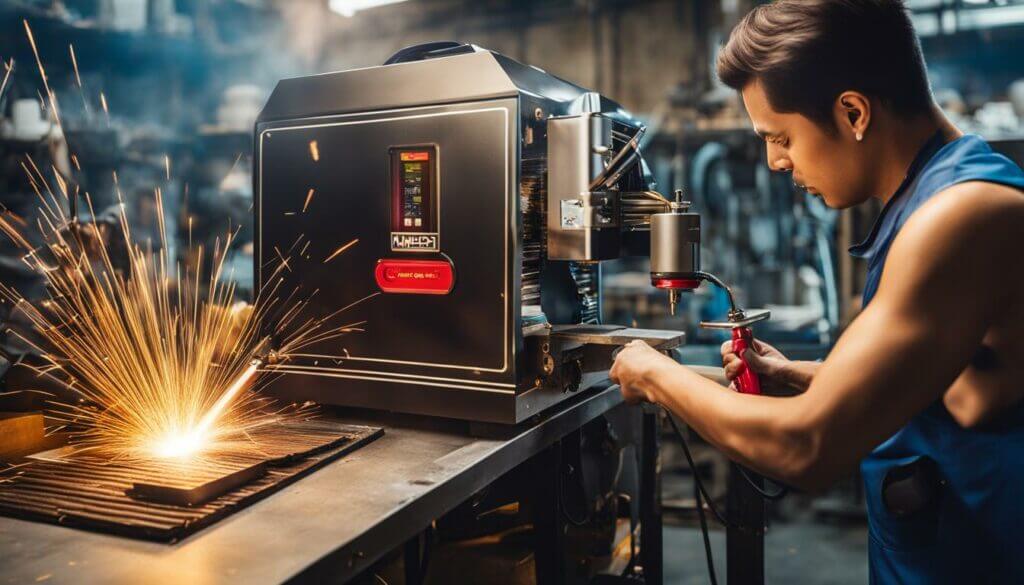
In today's business gifting culture, promotional gift customization has gradually become an important means for enterprises to maintain client relationships and enhance brand image. At the same time, the application of High Frequency Welding technology has demonstrated its indispensable technical advantages in this field.
By utilizing High Frequency Welding technology for customized production, enterprises can achieve precise pattern creation, rapid sample production, and delicate texture processing, thereby meeting customers' rich demands for product details. This not only enhances the degree of product personalization but also significantly improves production efficiency, achieving cost savings.
The advancement of customized manufacturing processes is fully showcased through High Frequency Welding technology. The following table lists several key applications of High Frequency Welding technology in customized production:
| Customization Item | High Frequency Welding Function | Energy-Saving and Eco-Friendly Impact |
|---|---|---|
| Exclusive Logo Embossing | High frequency embossing enhances detail clarity | Reduces energy consumption and processing waste |
| Unique Material Fusion | High frequency welding technology for precision bonding | Reduces material usage and enables recycling |
| Fine Edge Finishing | High frequency edge sealing ensures neat edges | Reduces material waste during processing |
| Custom Shape Design | High frequency forming achieves design precision | Optimizes production process, reduces carbon emissions |
From the above applications, it is evident that High Frequency Welding technology not only makes promotional gift customization faster and more flexible but also contributes to ecological environmental protection. Enterprises can use this technology to increase the added value of their products, further solidifying their competitive position in the market.
Case Analysis of High Frequency Welding Applications in Professional Manufacturing Processes

Across many industries, the improvement of professional manufacturing process technology has always been a focus for enterprises. In particular, High Frequency Welding application cases and their innovative applications across various industries have not only solved specific manufacturing process challenges but also set new standards for product quality and production efficiency. Below are several selected cases demonstrating how High Frequency Welding technology plays a key role in various manufacturing process analyses and optimization.
| Industry | High Frequency Welding Application Scenario | Process Optimization Results |
|---|---|---|
| Plastic Welding | High frequency material bonding technology for precision seamless welding of plastic components | Improved welding speed and quality, reduced production defect rate |
| Textile Processing | High frequency heat bonding for textile design patterns, maintaining texture and strength | Improved fabric quality, reduced processing time and cost |
| Circuit Board Manufacturing | High precision control in PCB drilling and forming using high frequency | Fine processing improves product performance, shortens production cycle |
| Automotive Components | High frequency heat press bonding for vehicle dashboard assembly | Improved assembly speed, ensures component quality stability |
| Medical Devices | High frequency sealing technology for sterile packaging | Enhanced product packaging integrity, prevents contamination risk |
Through the above High Frequency Welding application cases, we can clearly see that whether for welding and forming plastic products or manufacturing high-precision electronic products, High Frequency Welding technology can significantly improve production efficiency and cost-effectiveness while ensuring product performance and quality.
Overview of High Frequency Welding Process Technology
With the continuous advancement of technology, High Frequency Welding process technology has become an indispensable core element in modern manufacturing. High Frequency Welding technology primarily involves using electromagnetic waves in the high-frequency range for material processing — a process called high frequency heating. Due to its unique high frequency characteristics, this technology has been widely applied across numerous industrial sectors, performing exceptionally well in precision processes such as plastic welding, metal processing, and semiconductor manufacturing.
Let us start with the basic principles of High Frequency Welding process technology. When the frequency of electromagnetic waves increases to a certain range, material molecules undergo rapid vibration due to the rapid changes in the electromagnetic field, thereby generating heat energy. This phenomenon can be used to quickly heat the interior of materials. In special processes such as spot welding, high frequency can achieve material fusion in extremely short timeframes, greatly improving work efficiency and bond quality.
Below are some specific examples of High Frequency Welding process technology applications across different industries:
| Industry Category | High Frequency Welding Process Application |
|---|---|
| Plastic Products Manufacturing | Used for precision welding of plastic components, such as phone cases, automotive interior parts, etc. |
| Food Industry | Applied in food packaging sealing and sterilization, extending food shelf life |
| Medical Devices | High frequency welding of medical products such as urine bags and IV bags, ensuring sterility |
| Electronic Components | Used in semiconductor manufacturing for spot welding and reinforcement of fine components |
Through the above applications, we can see that High Frequency Welding process technology not only improves production efficiency but also strengthens product performance and quality assurance. Therefore, this technology has become an important tool for enhancing modern industrial competitiveness.
Corporate Identity and Market Competition: Dual Assurance of Quality and Technology
In the tide of globalization and digitalization, establishing corporate identity and enhancing market competitiveness have become increasingly important. Quality assurance and technology assurance are the cornerstones of building a strong corporate identity and establishing market position. High Frequency Welding technology, as the essence of modern manufacturing, brings dual improvements in quality and efficiency to enterprises.
During the early stages of product development, High Frequency Welding technology can precisely process materials, providing assurance for product precision. During production, through the precise control of High Frequency Welding technology, production errors can be effectively reduced, overall production efficiency improved, and reliable quality assurance achieved.
Furthermore, High Frequency Welding technology also makes significant contributions to technology assurance. With continuous technological advancement and updates, High Frequency Welding technology provides enterprises with ongoing technical support and innovation possibilities, helping enterprises continuously innovate products and maintain technological leadership.

In summary, High Frequency Welding technology not only ensures product quality but also provides robust technical support. The two complement each other, enabling enterprises to stand out in fierce market competition and establish a unique brand image and value.
Innovative Applications of High Frequency Welding in Automated Manufacturing
In modern manufacturing, high frequency automated manufacturing processes have become a major driving force for industry progress. Through the integration of High Frequency Welding technology, automated equipment has achieved remarkable results in improving production efficiency and reducing labor costs, bringing breakthrough innovations to quality control. Below is an analysis of high frequency automated manufacturing processes in different fields.
| Automated Manufacturing Field | High Frequency Welding Application | Innovation Results |
|---|---|---|
| Plastics Industry | High frequency welding technology improves bonding speed and quality | Shortened manufacturing cycles, significant cost-effectiveness |
| Metal Processing | High frequency heat treatment enhances metal performance | Enhanced product durability, meets stricter standards |
| Packaging Industry | High frequency sealing technology ensures packaging seal integrity | Improved product packaging quality, reduced environmental burden |
| Automotive Manufacturing | High frequency technology for precision assembly of components | Improved production rate, reduced defect rate |
| Medical Equipment | High frequency packaging technology ensuring product sterility | Improved product safety standards, prevents cross-contamination |
Combining innovative applications and precise control, high frequency automated manufacturing processes have become the key to modern production automation. They not only improve manufacturing efficiency but also set new benchmarks for product quality and environmental protection, demonstrating the powerful potential of High Frequency Welding technology in continuously driving manufacturing innovation and development.
Sustainable Development of Eco-Friendly Materials and High Frequency Welding Processes
In today's industrial progress, promoting sustainable development strategies has become increasingly important, with the practice of combining eco-friendly materials with High Frequency Welding processes being particularly crucial. The application of this technology not only improves the green index of product manufacturing but also effectively increases resource utilization, achieving energy conservation and emission reduction in the manufacturing process.
Manufacturing technology based on High Frequency Welding processes has demonstrated its advantages in areas such as plastic welding, metal surface treatment, and textile processing. Compared to traditional production methods, High Frequency Welding processes can complete higher-quality product manufacturing at lower energy consumption, which holds extraordinary significance for our planet's increasingly scarce resources.
The following table details how combining eco-friendly materials with High Frequency Welding processes promotes sustainable production:
| Eco-Friendly Material | High Frequency Welding Process Application | Sustainable Development Contribution |
|---|---|---|
| Biodegradable Plastics | Uses high frequency welding technology to reduce bonding defects | Reduces environmental impact throughout the plastic product lifecycle |
| Recycled Metal Materials | High frequency heat treatment to enhance metal material performance | Promotes material recycling, reduces mineral resource extraction |
| Organic Natural Fibers | High frequency energy applied for fiber textile fixation | Reduces chemical substance use, protects the ecological environment |
Technical Innovation and Professional Technology Exchange in International Markets
With the continued advancement of globalization, the demand for technical innovation and professional technology exchange in international markets is growing. Actively participating in international exchange and cooperation plays an irreplaceable role in driving technological innovation and expanding broader market opportunities. Particularly in the field of High Frequency Welding technology, its professional manufacturing process applications are the driving force behind the continuous progress of many advanced industries today.
This section aims to analyze how cross-border professional technology sharing assists industrial development, explore the practical pathways of technical innovation in the context of globalization and its impact on international markets. High Frequency Welding technology, with its precise and efficient characteristics, plays an important role in international cooperation for enhancing market competitiveness.
On one hand, technical innovation has driven the development of new materials and new processes. These innovations not only improve product quality but also create greater economic benefits. On the other hand, the international exchange of professional technologies has created diversified market demands, promoting collaborative progress across industries.
Facing the increasingly tight competition in international markets, the importance of technical innovation and professional technology exchange is becoming more prominent. The following data specifically demonstrates the importance of professional technology exchange in international markets.
| Technical Innovation Field | International Market Application Case | Innovation Results |
|---|---|---|
| High Frequency Welding Technology | Cross-border sharing of vehicle body lightweight welding technology in the automotive industry | Improved automotive safety performance and fuel efficiency |
| High Frequency Heat Treatment Process | Global machine tool industry application improving metal cutting efficiency | Extended tool life, reduced production costs |
| High Frequency Medical Device Manufacturing | Cross-border public health cooperation to develop new surgical treatment instruments | Improved surgical precision, reduced patient recovery time |
From the above cases, it is evident that technical innovation has become a key force in promoting international market cooperation and competition. High Frequency Welding technology, as a leader in the professional technology field, will continue to inspire more industrial applications with limitless possibilities through international professional technology exchange.
Future Trends and Development Directions of High Frequency Welding Technology
With the deepening development of global industrial automation and smart manufacturing, forward-looking High Frequency Welding technology has demonstrated its strategic importance in future trends. These technologies have enormous potential in improving manufacturing process efficiency, ensuring product quality, and achieving eco-friendly production.
Currently, industry experts and research institutions are dedicated to pushing High Frequency Welding technology toward more advanced stages, including combining nanotechnology to enhance material performance, optimizing operational parameters through big data analysis, and utilizing artificial intelligence (AI) for system self-learning and predictive maintenance. Below are the key points for achieving development directions through forward-looking technology.
| Technical Innovation | Implementation Method | Expected Benefits |
|---|---|---|
| Smart IoT Integration | Achieve remote device monitoring and data exchange | Improve production efficiency and reduce operation and maintenance costs |
| Green Manufacturing Research | Develop low-energy, low-emission high frequency welding equipment | Promote eco-friendly production and sustainable development |
| Miniaturization and Modular Design | Innovate smaller, modular high frequency welding equipment | Accommodate flexible production lines, improve space utilization |
| Precision Processing Technology | Combine advanced algorithms for high-precision high frequency processing | Enhance precision and stability of micro-component processing |
| Intelligent Process Control | Utilize AI for process optimization and fault prediction | Reduce human error, improve product consistency |
Combining the above elements, the major development direction of High Frequency Welding technology in the future will move toward achieving more intelligent production systems, while focusing on reducing environmental impact and improving resource efficiency. As a manufacturing process technology with far-reaching influence, High Frequency Welding will continue to promote eco-friendly and economical manufacturing while driving industrial progress.
Conclusion
As this article's in-depth exploration of High Frequency Welding technology comes to a close, we can summarize the key role this technology plays in improving manufacturing process efficiency, ensuring product quality, and promoting environmental protection. Looking to the future, this established forward-looking technology will undoubtedly continue to exert its significant influence in diverse industry applications including plastic welding, metal heat treatment, and electronic component manufacturing.
The development of High Frequency Welding technology has not stopped — on the contrary, it is leading the manufacturing industry toward a more precise and intelligent production future. From significant improvements in production efficiency to the highest guarantees of product quality, as well as important contributions to eco-friendly production, High Frequency Welding technology has proven its value and potential in modern industry.
In conclusion, High Frequency Welding technology shines in both current and future manufacturing development, not only providing enterprises with a powerful competitive advantage but also accelerating the innovation process in industry applications. With technological progress and increasing environmental awareness, it will undoubtedly continue to lead the manufacturing industry toward a new era of high efficiency, precision, and green practices.