

In a fiercely competitive business environment, getting products to market quickly is crucial. The OEM/ODM manufacturing model can help companies accelerate their product launches. This strategy not only shortens development time but also reduces costs.
This model enables companies to respond more quickly to market demands. It also enhances their competitiveness.
This article provides an in-depth exploration of how to accelerate time to market through OEM/ODM. It offers practical strategies and recommendations, analyzes the advantages of this collaboration model, how to select the right partner, and how to ensure successful product development and production.
Definitions and Differences Between OEM and ODM
In the product manufacturing sector, OEM and ODM are two common collaboration models. OEM stands for Original Equipment Manufacturer, while ODM stands for Original Design Manufacturer. These two models play different roles in product development and production.
| Characteristic | OEM | ODM |
|---|---|---|
| Product Design | Completed by the brand company | Completed by the manufacturer |
| Production Process | Produced according to brand requirements | Self-designed and produced |
| Innovation Space | Smaller | Larger |
| Cost Control | Led by the brand company | Led by the manufacturer |
| Brand Influence | Strong | Weak |
Choosing between OEM or ODM depends on the company's strategic goals and resource allocation. Understanding the differences between these two models helps businesses make more informed decisions in product development and market competition.
Advantages of Choosing OEM/ODM
Choosing the OEM/ODM collaboration model offers significant benefits for businesses. First, it can dramatically shorten product development time. Professional OEM/ODM manufacturers have extensive production experience and advanced equipment.
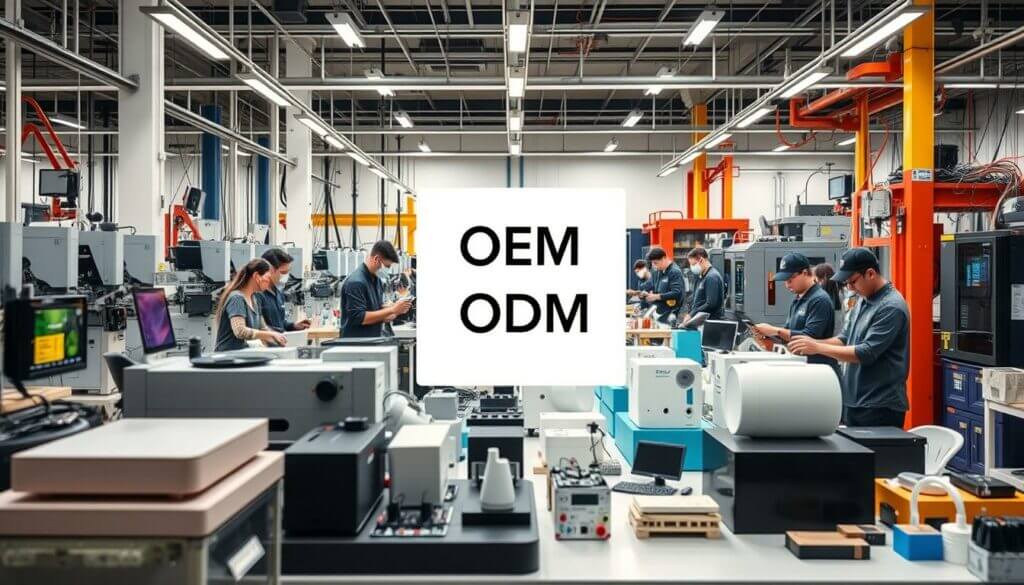
The production phase is handled by professional manufacturers.
Finally, OEM/ODM collaboration helps businesses quickly enter new markets. By partnering with local manufacturers, companies can better adapt to local regulations and market demands.
This accelerates market expansion.
| Advantage | OEM | ODM |
|---|---|---|
| Shortened Development Time | Moderate | High |
| Cost Reduction | High | Moderate |
| Focus on Core Competencies | Moderate | High |
| Quick Entry to New Markets | Moderate | High |
Product OEM Manufacturing Process and Steps
The OEM manufacturing process involves multiple key steps. These steps ensure that products are delivered on time and at high quality. First, the brand owner needs to clearly define product specifications and quantities.
| Step | Content | Importance |
|---|---|---|
| Requirements Confirmation | Define product specifications and quantities | High |
| Contract Signing | Reach agreement with OEM manufacturer | High |
| Sample Production | Produce and test product samples | Medium |
| Production Planning | Develop production plan and timeline | Medium |
| Mass Production | Begin batch production of products | High |
| Quality Control | Conduct multiple quality inspections | High |
| Packaging and Shipping | Complete product packaging and shipping | Medium |
Understanding the OEM manufacturing process is important for brand owners. It helps manage production progress, ensure product quality, and control costs. Selecting the right OEM manufacturer and establishing good communication mechanisms are key to successfully implementing an OEM strategy.
Key Elements of the ODM Collaboration Model
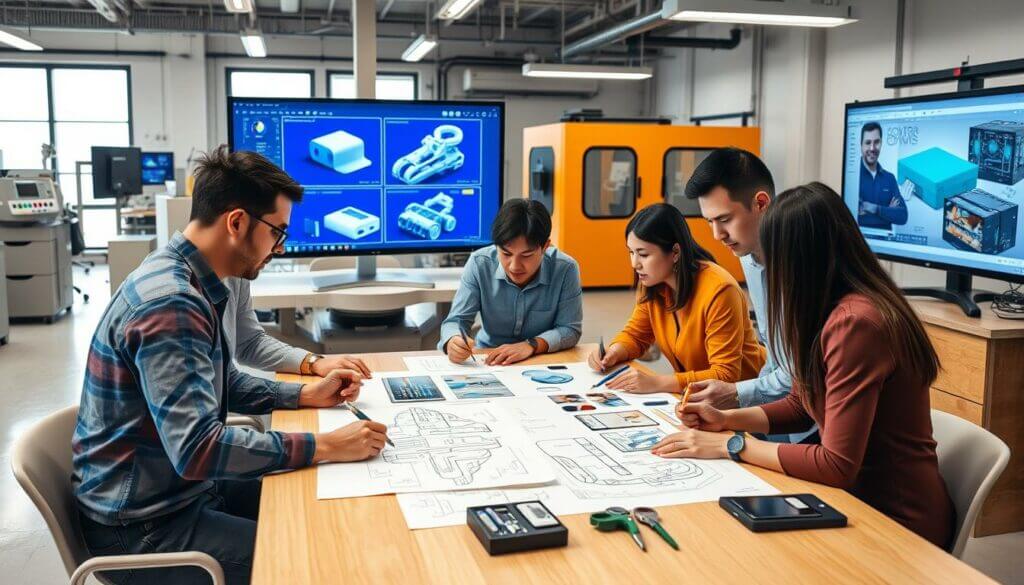
This not only shortens time to market but also provides innovative solutions for clients.
Quality control is another key aspect of ODM collaboration. ODM suppliers must establish strict quality management systems. This ensures every product meets client standards and market requirements.
This encompasses multiple stages including raw material testing, production process monitoring, and finished product inspection.
Cost control is also important. ODM suppliers need to reduce production costs through optimized production processes and increased automation. This allows them to offer more competitive pricing to clients.
At the same time, supply chain management capability is crucial. It ensures stable raw material supply and improved production efficiency.
- Strong R&D capabilities
- Strict quality management
- Effective cost control
- Efficient supply chain management
- Flexible production capacity
- Good communication and collaboration
Finally, good communication and collaboration are essential. ODM suppliers need to maintain close communication with clients. This enables them to promptly understand changing needs and quickly respond to market feedback.
This flexibility and adaptability is a crucial guarantee for ODM collaboration to continuously create value.
How to Choose the Right OEM/ODM Partner
Choosing the right OEM/ODM partner is very important for businesses. First, consider their production capabilities and technical expertise. This ensures they can meet your product requirements.
Second, review their quality control systems. This ensures products meet your standards.
Evaluating the partner's financial situation and market reputation is also critical. A sound financial position ensures long-term collaboration. A good market reputation reduces partnership risks.
Consider their innovation capability and R&D investment. This may bring you additional value.
Finally, ensure both parties reach consensus on intellectual property protection. This protects your interests.
- Evaluate production capability and technical expertise
- Review quality control systems
- Consider financial situation and market reputation
- Pay attention to geographic location and logistics capability
- Value communication ability and cultural compatibility
- Focus on innovation capability and R&D investment
- Ensure consensus on intellectual property protection
Intellectual Property Protection in OEM/ODM Collaboration
In OEM/ODM collaboration, intellectual property protection is extremely important. Companies must adopt multiple measures to protect their innovations. First, signing detailed confidentiality agreements is a fundamental step, clearly defining the rights and obligations of both parties.
Second, establish strict document management systems to limit the circulation of sensitive information. This reduces the risk of information leakage.
Additionally, companies can consider applying for patent protection to build legal barriers around their technological innovations. During the product design phase, modular design can be adopted to separate core technology from general manufacturing processes, reducing the risk of technology leakage.

During the collaboration process, both parties should establish good communication mechanisms to resolve potential intellectual property disputes in a timely manner. Additionally, choosing a partner with a good reputation is equally important, as it can significantly reduce the risk of intellectual property infringement.
Companies can also consider adding breach of contract compensation clauses to increase the cost of violations.
| Protection Measure | Specific Approach | Expected Outcome |
|---|---|---|
| Confidentiality Agreement | Sign detailed legal documents | Clarify responsibilities for both parties, provide legal protection |
| Patent Application | Apply for patents on core technologies | Obtain legal protection, prevent technology theft |
| Modular Design | Separate core technology from general manufacturing | Reduce technology leakage risk |
| IP Audit | Regularly review intellectual property status | Promptly discover and resolve potential issues |
Strategies for Reducing Production Costs Through OEM/ODM
OEM/ODM collaboration is an effective method for reducing production costs. Companies can leverage the economies of scale of contract manufacturers to lower unit production costs. Choosing the right OEM/ODM partner allows companies to focus on core competencies and reduce fixed asset investments.
Cost control strategies include: optimizing supply chain management, streamlining production processes, and adopting automation technology. Closely collaborating with contract manufacturers on joint development of new materials and processes can also effectively reduce costs. Additionally, centralized raw material procurement can improve bargaining power.
Companies can also consider relocating production to regions with lower labor costs. However, factors such as quality control and delivery time must be balanced. Flexibly adjusting production plans to reduce excess inventory is also an important cost control measure.
| Cost Reduction Strategy | Potential Savings |
|---|---|
| Economies of Scale | 10-20% |
| Supply Chain Optimization | 5-15% |
| Automated Production | 15-30% |
| New Material Application | 8-18% |
| Centralized Procurement | 7-12% |
Through these strategies, companies can significantly reduce production costs and improve market competitiveness. However, it is important to note that cost control should not come at the expense of product quality. Establishing a long-term, stable partnership with an OEM/ODM partner is essential for achieving sustainable cost advantages.
OEM/ODM Techniques for Accelerating Product Development Cycles
In a highly competitive market, shortening product development cycles is crucial. The OEM/ODM collaboration model can dramatically accelerate this process. Using advanced design tools and 3D printing technology enables rapid prototyping.
This reduces the time spent on repeated modifications. Modular design makes component assembly more flexible, improving development efficiency.
Effective communication is key to accelerating development. Establishing a dedicated project management team ensures close contact between OEM/ODM suppliers and brand owners. This enables timely problem resolution.
This improves production efficiency. Implementing lean production methods can eliminate waste and further shorten development cycles.
| OEM/ODM Technique | Effect |
|---|---|
| 3D Printed Prototypes | Accelerate design validation |
| Modular Design | Increase development flexibility |
| Cloud Collaboration Platform | Enable real-time communication |
| Lean Production | Reduce waste, improve efficiency |
Through these OEM/ODM techniques, companies can significantly shorten product development cycles. This allows them to quickly transform innovative ideas into market advantages. In global competition, this efficiency improvement will be a decisive factor for success.
Application of OEM/ODM in the Globalized Market
The OEM/ODM model plays a very important role in the global market. Many multinational companies use it to enter new markets. This reduces costs while accelerating product launches.
For example, Apple's partnership with Foxconn enables large-scale iPhone production in China. This has successfully achieved global distribution.
In emerging markets, the OEM/ODM model demonstrates even greater advantages. Many local companies can gain access to advanced technology and management experience. This enhances their competitiveness.
Taiwan's ASUS is a prime example. It started as an OEM and gradually became a globally recognized brand. This demonstrates the powerful potential of the OEM/ODM model.
Under the trend of globalization, OEM/ODM collaboration is no longer limited to manufacturing. The service industry has also begun adopting similar models.
India's IT outsourcing services are a typical example. Many Western companies outsource software development and customer service to Indian companies. This achieves a win-win of cost-effectiveness and specialized services.
As global supply chains become more complex, the OEM/ODM model faces new challenges and opportunities. Companies need more flexible strategies to address factors such as trade policy changes and geopolitical risks.
In the future, OEM/ODM collaboration will place greater emphasis on sustainable development and social responsibility. This is necessary to meet the evolving needs and expectations of global consumers.