

With the continuous advancement of technology, you have witnessed firsthand the leap from flat printing to three-dimensional creation. Today, let us explore together how Silicone Printing technology breaks through traditional 2D boundaries to usher in an innovative era of 3D printing. In this revolution, the transition from 2D to 3D is not just a turning point but a commitment to rapidly responding to precision manufacturing and personalized demands.
As you see in daily life, whether it's phone protective cases or vehicle valve seals, silicone applications have become an indispensable part of our lives. The emerging 3D Silicone Printing technology not only expands design possibilities but also adds diversity and functionality to products, fully demonstrating the perfect fusion of industrial technology and innovative design.
Key Insights
- 3D Silicone Printing technology is an innovative milestone that transcends 2D printing.
- It offers unparalleled design freedom and functionality.
- The use of new materials brings significant improvements in product durability and stability.
- Automated production processes open new chapters for production efficiency and cost control.
- This technology has broad application prospects in smart manufacturing and personalized product design.
- Intellectual property protection is crucial for innovation and technological development.
- Sustainable development is one of the important trends in future 3D Silicone Printing technology development.
Introduction: The Transformation from Traditional 2D Printing to 3D Silicone Printing Technology
With the advancement of technology, the printing industry has undergone a major transformation from traditional 2D printing to 3D Silicone Printing technology.
Traditional 2D printing has long dominated the market with its characteristics of being cost-effective and enabling rapid mass production. However, with the diversification of market demands and the rise of personalization trends, 3D Silicone Printing technology is gradually gaining attention.
| Feature | Traditional 2D Printing | 3D Silicone Printing |
|---|---|---|
| Dimensions | Flat | Three-Dimensional |
| Materials | Paper, plastic, etc. | Silicone, resin, etc. |
| Application Range | Books, posters, packaging, etc. | Industrial design, medical models, custom products, etc. |
| Degree of Customization | Limited | Very High |
As shown in the table, 3D Silicone Printing not only expands the shapes and textures of printed products but also opens new territories for personalized customization and functional applications. The development of this technology not only has high commercial value but also provides unprecedented freedom for innovation and design.
The Rise of Next-Generation Technology: The Concept of 3D Silicone Printing
When we talk about 3D Silicone Printing, we are discussing a type of advanced manufacturing technology that breaks through traditional two-dimensional planar limitations and can perform precision processing on multiple layers. This revolutionary technology not only enables designers' creativity to be realized in three dimensions but also brings unprecedented possibilities to the manufacturing industry.
From rapid prototyping to customized production, 3D Silicone Printing makes the creation of complex-structured physical objects readily accessible, significantly improving the efficiency and flexibility of product R&D. Compared to traditional production models, this technology's high adaptability and low-cost characteristics have enabled rapid development across multiple fields, becoming a major force driving Industry 4.0 progress.
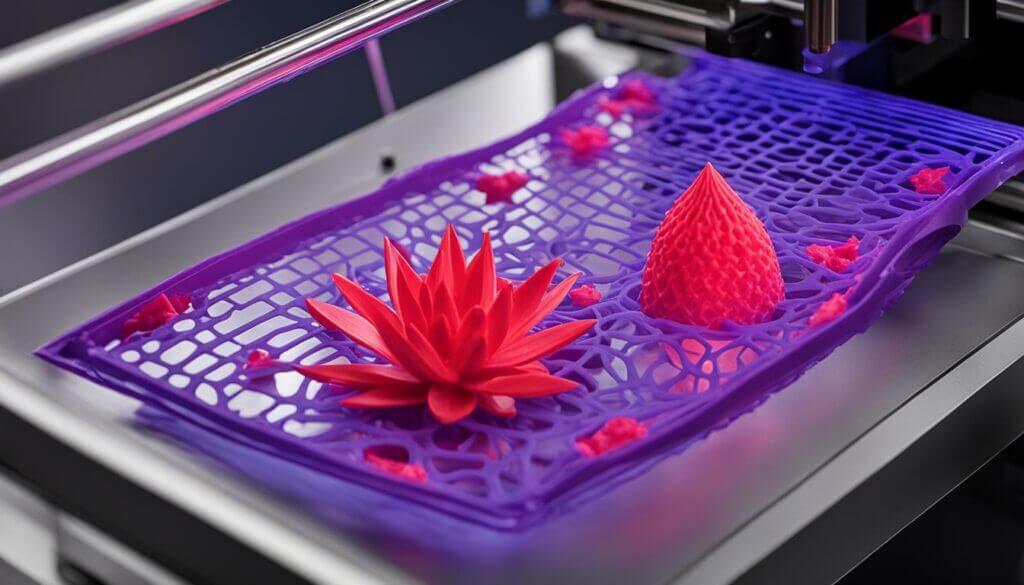
| 3D Silicone Printing Feature | Technical Advantage |
|---|---|
| Depth and three-dimensional effects | Rich visual and tactile experience, inspiring unlimited product design possibilities. |
| Customized production | On-demand printing, highly customized services meeting personalized market demands. |
| High material utilization | Precise material usage, reducing waste, aligning with green manufacturing principles. |
| Iterative development speed | Rapid iteration feedback, shortening product development cycles, accelerating market penetration. |
From this perspective, 3D Silicone Printing is not merely a single manufacturing technology but an industrial evolution toward three-dimensional, intelligent manufacturing, providing you with more dimensions of production and creative space.
A Leap in Materials Science: The Evolution of Silicone Printing Materials
In today's rapidly developing Silicone Printing technology, advances in materials science bring unprecedented opportunities in product design and innovation. Silicone materials, with their advantages of high elasticity, heat resistance, and biocompatibility, play important roles across multiple industries including medical, automotive, and consumer electronics.
Through precise molecular-level design, the composition and structure of silicone have been **optimized**, enabling it not only to withstand extreme pressure changes but also to perform precise 3D forming. With these advances, you can now create 3D printed products with smoother curves and richer details.
Beyond this, R&D in Silicone Printing materials also focuses on **green processes** and **sustainable development**, meeting market demand for environmentally friendly products. Therefore, choosing evolved Silicone Printing materials not only enhances your product quality but also fulfills corporate social responsibility.
As the **functional diversity** and **adaptability** of silicone printing materials improve, they are driving a new wave of 3D printed products in performance and application areas. At this juncture, as an industry pioneer, you stand at the very forefront of printing technology innovation.
Principles and Applications of 3D Silicone Printing
3D Silicone Printing technology builds three-dimensional objects by layering silicone materials with high precision. You can think of it as a traditional inkjet printer, but using silicone material and capable of creating functional products in three-dimensional space. This technology greatly expands the possibilities for creating complex structural designs and offers a high degree of customization flexibility.
In fields such as medical devices, consumer electronics, and the automotive industry, 3D Silicone Printing has already demonstrated its powerful application potential. For example, in the medical field, it can be used to create personalized implants that conform to patient anatomy. This not only speeds up the manufacturing process but also improves product quality and functionality.
The key to 3D Silicone Printing lies in its precise layer control and material formula diversity. Through precision slicing software, each layer of silicone can be accurately printed in predetermined positions, gradually building up to the final three-dimensional structure. Furthermore, researchers have developed silicone materials with varying hardness, elasticity, and heat resistance to meet increasingly diverse market demands.
From your daily consumer products to professional industrial machine parts, the innovation and convenience brought by 3D Silicone Printing is progressively demonstrating its revolutionary impact at every level. In the future, this technology is expected to continue breaking through the limitations of traditional manufacturing, creating more amazing application prospects.
Technical Methods: Key Technologies in 3D Silicone Printing
With the rapid development of 3D printing technology, 3D Silicone Printing has become an innovative and critical technology in manufacturing. This emerging field combines precision engineering, materials science, and digital design, bringing revolutionary changes to your product manufacturing process. The table below introduces some key technologies and equipment required for 3D Silicone Printing, as well as their respective importance and functions in the silicone printing workflow.
| Technology/Equipment | Function Description | Importance |
|---|---|---|
| 3D Model Design Software | Designing precise 3D print models with detailed modifications to meet specific print requirements. | Very High |
| Silicone Materials | Providing elasticity and durability, enabling printing of objects in various shapes and sizes. | Critical |
| 3D Printer | Stacking layers according to 3D model design to form three-dimensional physical objects. | Essential |
| Curing System | Using UV light or heat to cure silicone material, ensuring the final product's solidity. | Important |
| Post-Processing Equipment | Polishing, cleaning, and coating treatment to enhance product surface quality and lifespan. | Critical |
| Quality Inspection Tools | Ensuring 3D printed components meet design specifications and functional requirements. | Essential |
| Automated Control System | Optimizing the printing process, improving production efficiency and product consistency. | Very High |
Combining High Precision and Complexity: Refined 3D Silicone Printing
With continuous technological advancement, 3D Silicone Printing has achieved unprecedented levels of high precision and complexity. How does this refined 3D Silicone Printing technology showcase its unique advantages? Let us explore the details.
3D Silicone Printing can not only produce exquisite textures but also achieve multi-layered three-dimensional effects. These features make it increasingly widely applied in medical devices, aerospace, automotive manufacturing, and other fields.
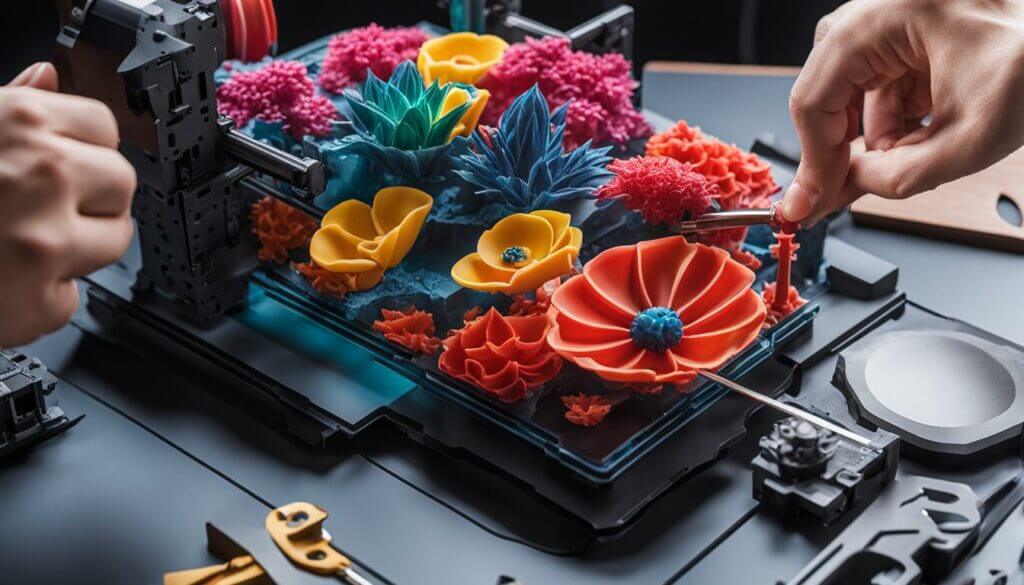
To achieve high precision, 3D Silicone Printing machines must have extremely high positioning accuracy and repeatability. Additionally, the silicone materials used should possess good flow characteristics and curing behavior to accommodate fine printing requirements.
From design to printing, every step demands precise calculation and careful execution. Your creativity can be realized through this advanced manufacturing technology, whether it's complex geometric structures or details as fine as a hair — 3D Silicone Printing can present them all.
To further understand the advantages of this technology, let us observe the following table:
| Feature | 3D Silicone Printing Capability |
|---|---|
| Precision | Extremely high positioning accuracy and repeatability |
| Material Fluidity | Excellent silicone material flow characteristics |
| Structural Complexity | Capable of handling extremely complex structures |
| Design Freedom | Nearly unlimited design possibilities |
Consider using refined 3D Silicone Printing technology for your next innovative project. Whether to achieve higher product quality or to enhance design flexibility and creativity, it can provide powerful support.
Improving Production Efficiency: 3D Silicone Printing and Automated Production
As technology advances, 3D Silicone Printing technology is becoming increasingly mature, and its combination with automated production is bringing unprecedented improvements in production efficiency and quality to the industry. In Taiwan, this technology is transforming manufacturing production lines, particularly in rapid prototype manufacturing of components and production of personalized products. Let us delve into understanding how automated production enhances the efficiency of 3D Silicone Printing.
First, automated production systems ensure the accuracy of the 3D Silicone Printing process. This technology utilizes precise mechanical equipment, with every step from design to printing undergoing rigorous program control to ensure each product achieves high-standard consistency and precision.
Second, automated systems reduce the need for manual operation, meaning lower error rates and faster production times. In this way, production efficiency is significantly improved while production costs are simultaneously reduced.
| Category | Traditional Production | Automated 3D Silicone Printing Production |
|---|---|---|
| Production Speed | Slower | Faster |
| Cost Efficiency | Higher labor costs | Reduced labor and material costs |
| Personalized Production Capability | Limited | Highly flexible and customizable |
| Error Rate | High | Low |
| Market Adaptability | Slower | Rapid response |
Patents and Technical Inventions: Protecting Intellectual Property in 3D Silicone Printing

With the rapid development of 3D Silicone Printing technology, it has become an industry focal point. However, the continuous evolution and commercialization of this innovative technology also makes intellectual property protection increasingly important. Protecting your technical innovations from infringement is not only the foundation for maintaining competitive advantage but also the key to ensuring return on investment.
To safeguard 3D Silicone Printing-related inventions, patent applications have become a necessary path for enterprises. Patent rights can effectively prevent others from manufacturing, using, or selling your inventions without authorization. In Taiwan, the Intellectual Property Office provides a comprehensive application process to help enterprises complete every procedure from filing to authorization.
However, patent applications require complete and clear patent documents. Enterprises engaged in 3D Silicone Printing must understand the art of patent writing, including descriptions of technical details and innovation points, so that patent examiners can fully understand the innovation and practicality.
Beyond patents, maintaining trade secrets is another way to protect intellectual property. Through confidentiality agreements and internal management, enterprises can ensure that key technologies are not leaked, thereby maintaining their leading position in fierce market competition.
Whether choosing patent protection or trade secret protection, understanding and applying the correct intellectual property strategy is crucial for the commercial success of 3D Silicone Printing technology.
Applications of 3D Silicone Printing in Smart Manufacturing
When exploring the importance of 3D Silicone Printing, we must mention its revolutionary applications in the smart manufacturing field. This highly efficient printing technology is bringing unprecedented innovative capabilities and production flexibility to the manufacturing industry.
Smart manufacturing systems utilize advanced data analytics and networked equipment, and their combination with 3D Silicone Printing technology means that manufacturing processes can be easily customized and adjusted in a short time. Your production line can achieve rapid setup and changeover, effectively meeting ever-changing market demands.
Below is a detailed table on how 3D Silicone Printing is applied in smart manufacturing:
| Smart Manufacturing Aspect | 3D Silicone Printing Application | Resulting Transformation |
|---|---|---|
| Rapid Component Prototyping | High-elasticity material printing | Shortened time from design to prototype |
| Personalized Production | On-demand custom design | Meeting consumer personalization demands |
| Component Complexity | Multi-layered precision printing | Achieving structural and functional diversity |
| Tool and Mold Manufacturing | Using environmentally adaptable materials | Reducing production costs and improving tool lifespan |
| Data-Driven Automation | Combining machine learning with the printing process | Automated calibration and optimization of printing parameters |
Future Trends and Development Predictions: Outlook for the 3D Silicone Printing Industry
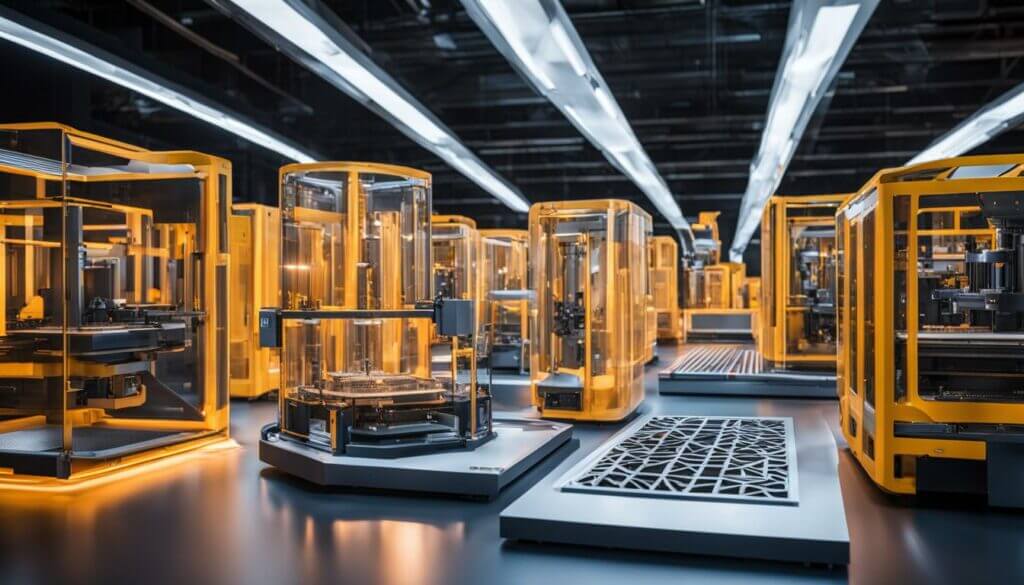
Stepping into the new era of digital transformation, 3D Silicone Printing technology continues to advance at an astonishing pace, with great expectations from all sectors for the future development and potential of this technology. As innovative R&D and application cases continue to increase, the market value of this field is expected to reach unprecedented heights.
| Forecast Indicator | 2023 | 2025 | 2030 |
|---|---|---|---|
| Market Size | $1 billion | $2.5 billion | Over $5 billion |
| Technological Breakthroughs | Significant improvement in additive manufacturing precision | Ultra-fast 3D printing reaches commercialization | Production-grade 3D Silicone Printing becomes standard |
| Industry Applications | Medical and aerospace adoption begins | Automotive and construction adopt extensively | Bioprinting and smart textiles become widespread |
| Innovative Materials | Multiple silicone printing materials emerge | Silicone composite material development and application | Eco-friendly degradable materials become mainstream |
| Geographic Distribution | Europe and America as dominant markets | Asia-Pacific market rapidly ascending | Global production chain established |
As industrial structures transform, 3D Silicone Printing may not only revolutionize traditional manufacturing models but will also bring new business opportunities for customization and small-batch production. Therefore, active industry investment in R&D in this field is the only way to maintain competitiveness.
Energy Conservation and Environmental Protection: 3D Silicone Printing and Sustainable Development
Facing the dual challenges of global warming and resource scarcity, energy conservation and environmental protection have become essential considerations in the manufacturing industry. 3D Silicone Printing is not only a product of technological innovation but also a key step toward sustainable development. This revolutionary technology makes material usage more precise in the production process, significantly reducing raw material waste while decreasing energy consumption and lowering the environmental impact of production.
**Energy conservation** and **carbon reduction** are among the core values of contemporary production, and 3D Silicone Printing technology effectively integrates these two concepts. Achieving more production with less energy not only improves efficiency but also demonstrates a commitment to environmental protection.
| Advantage | Role of 3D Silicone Printing | Contribution to Sustainable Development |
|---|---|---|
| Material Utilization | Improving material precision, reducing waste | Supporting circular economy, reducing resource extraction |
| Energy Efficiency | Precise production processes, lowering energy demands | Reducing greenhouse gas emissions, achieving carbon reduction goals |
| Process Innovation | Simplifying production steps, reducing environmental burden | Driving green transformation in manufacturing |
As a consumer or manufacturer who values innovation and environmental protection, 3D Silicone Printing technology provides you with a new option for achieving harmony between product design and ecology. The development of this technology represents not only an improvement in product quality and production efficiency but also a commitment to environmental responsibility and sustainable development.
Case Analysis: 3D Silicone Printing Applications in the International Market
When browsing various products in the international market, you may have already encountered the results of 3D Silicone Printing without realizing it. From athletic shoe uppers to phone case textures, 3D Silicone Printing technology provides unparalleled texture and durability, adding a layer of tactile richness to products.
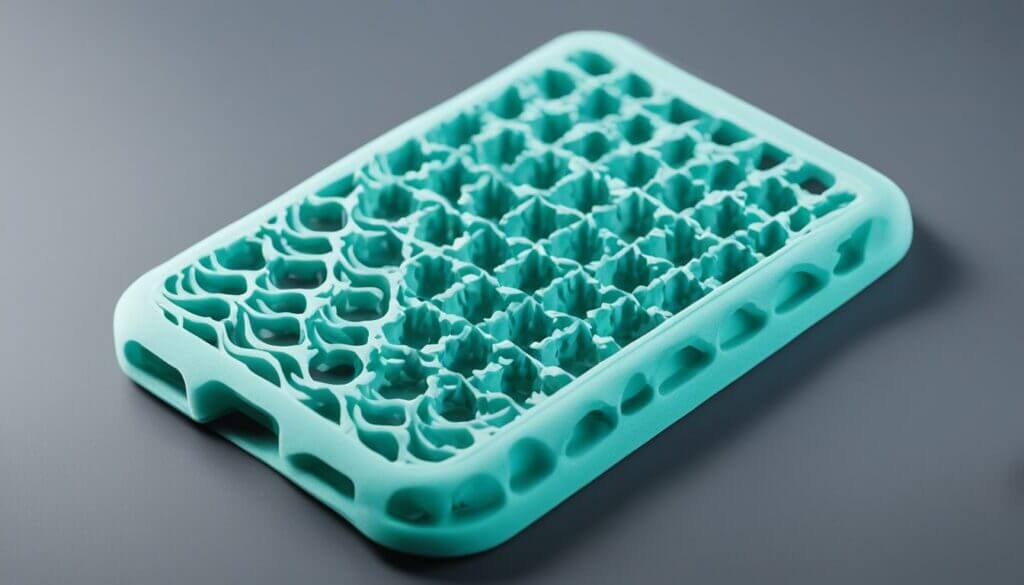
For example, renowned sports brand Adidas once used 3D Silicone Printing technology to create a special soccer shoe upper. The surface design of the "Adidas Predator 20+" shoe utilized 3D Silicone Printing to provide better ball control, thereby improving athletic performance. This move not only enhanced product functionality but also added a unique visual effect.
Another case from the automotive industry is BMW's adoption of 3D Silicone Printing technology in some of its interior trim. This not only effectively improved the durability of interior components but also greatly enhanced the sense of luxury in the cabin, showcasing the fusion of technology and art.
The applications of 3D Silicone Printing in the international market extend far beyond this. The multi-dimensional printing revolution it brings is gradually disrupting traditional manufacturing standards and opening up new frontiers. As consumers and industry participants, we have reason to believe that this technology will continue to shine in different fields, creating more amazing products.
Challenges and Opportunities Facing 3D Silicone Printing Technology
When exploring 3D Silicone Printing technology, we need to understand the challenges it encounters during development while also analyzing the unlimited opportunities that may be expanded. Market demand for high-quality 3D silicone products is growing, and these demands are driving rapid advancement of related technologies. Modern printing technology not only requires finer patterns and more precise dimensions but also aims to produce more products in less time to meet rapid market demands.
Next, let us examine the specific challenges and potential development opportunities facing this innovative technology through a detailed table.
| Challenges | Opportunities |
|---|---|
| Raw material costs and supply stability | Developing eco-friendly and cost-effective new materials |
| Precision equipment investment and maintenance | Integration of automation and smart manufacturing |
| Technical personnel training and professional development | Combining with online learning platforms to improve talent cultivation efficiency |
| Production speed and quality control | Optimizing 3D printing software to improve production efficiency and quality |
| Market education and consumer awareness | Increasing marketing efforts to enhance technology visibility |
These challenges involve not only the technology itself but are also related to multiple factors including market demand, cost control, and supply chain collaboration. However, it is precisely because of these challenges that more innovation and breakthroughs are born in the process of finding solutions.
In the future, 3D Silicone Printing technology will inevitably combine with advanced technologies such as artificial intelligence and machine learning, further enhancing the overall strength of the smart manufacturing field and bringing more precise, convenient, and sustainable production solutions to various industries.
Conclusion
With the rapid development of technology, the transformation from traditional 2D printing to 3D Silicone Printing has demonstrated a tremendous leap in materials science and manufacturing, opening up limitless possibilities for the future. In this article, we have organized every aspect of this technology from principles and applications to refinement, showcasing the rich content and broad prospects contained in this emerging field.
Regarding the various applications of 3D Silicone Printing, whether in smart manufacturing, energy conservation and environmental protection, or actual cases in the international market, we have provided comprehensive analysis to help you understand how this technology revolutionizes traditional industries and how it integrates with the concept of sustainable development. With further technological progress and innovation, the potential of 3D Silicone Printing will continue to be explored, driving the entire industry forward.
Looking to the future, how 3D Silicone Printing technology will further change our lives and work is an exciting trend worth anticipating. Taiwan, as a hub of technological development, has the best opportunities to venture into this field. Through continuous innovation and sound intellectual property protection, we believe 3D Silicone Printing will become a core driving force for the next generation of manufacturing.