

In today's fiercely competitive industrial environment, quality management has become the key to your enterprise's success. Especially in the silicone printing field, from raw material arrival to finished product delivery, every step of the control process directly impacts product quality assurance and market competitiveness.
This article will delve into how to safeguard your silicone printing products through systematic quality control processes, ensuring they are presented to consumers at the highest standards, while sharing some critical strategies from practice to help your enterprise stand out with quality advantages.
Key Takeaways
- A clear quality management process helps improve overall product quality.
- From raw material inspection to finished product examination, every step of the control process is crucial.
- The quality of silicone printing products determines a company's standing in the market.
- Strictly adhering to quality standards effectively achieves quality assurance.
- Continuous improvement and adoption of new technologies can further strengthen the quality management system.
- Consumer trust stems from the consistency and reliability of product quality.
- Optimizing quality management is an investment in the enterprise's long-term success.
The Importance of Silicone Printing Quality Control
In today's rapidly developing manufacturing industry, silicone printing is widely used in various products, and its quality control level directly affects overall product performance. Because silicone itself possesses excellent physical and chemical properties — such as high elasticity, high-temperature resistance, and good chemical stability — it is an indispensable material for medical devices, household products, automotive parts, and consumer electronics.
Examining the importance of quality control, we understand that this is not only a basic requirement for maintaining product performance but also a key means of enhancing customer trust in the brand. In today's era of rising consumer protection awareness, enterprises need to ensure every product meets high standards through strict quality management, thereby standing out in the market.
| Quality Control Stage | Impact on Product | Impact on Consumer |
|---|---|---|
| Raw Material Selection and Inspection | Guarantees raw material quality, laying the foundation for product performance | Products are safer and more durable, improving user satisfaction |
| Production Process Monitoring | Real-time adjustment of production parameters ensures stable product quality | Reduces product defect rates, enhancing purchase confidence |
| Finished Product Testing | Screens qualified products, eliminates defective items | Protects consumer rights, builds positive brand image |

In summary, whether it is improving product durability or enhancing the consumer experience, quality control in silicone printing plays an indispensable role. If your brand commits to continuous optimization and improvement in this area, it will certainly establish a firm foothold in intense market competition.
Basic Quality Management Process for Silicone Printing
In the silicone printing field, the **quality management process** is key to ensuring product quality meets **production standards**. This process begins with strict raw material screening and extends to precise finished **product inspection** — every stage cannot be overlooked.
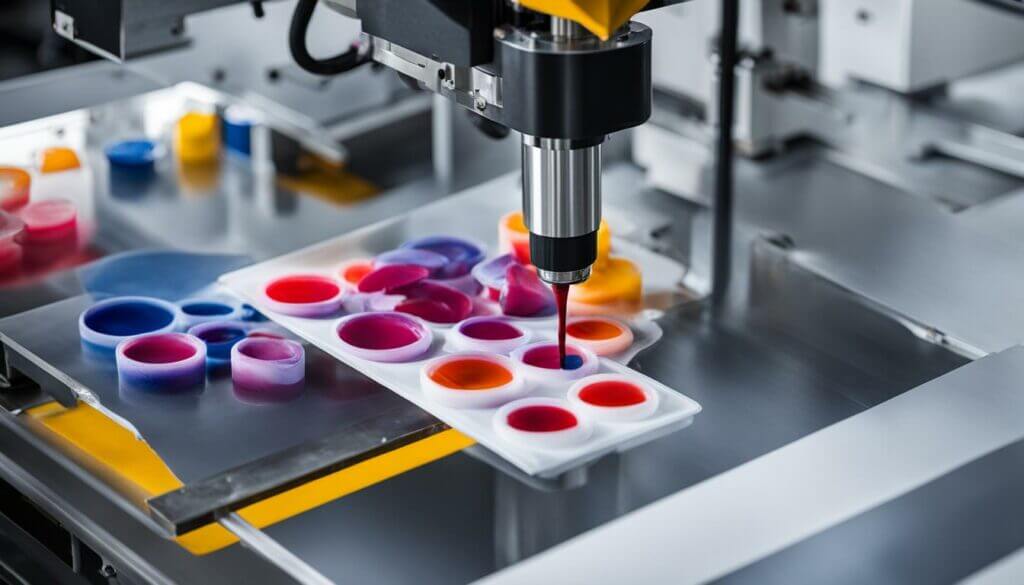
First, when silicone raw materials arrive, they must pass review of various inspection reports including RoHS and REACH to verify compliance with international safety standards. Subsequently, during the pre-production preparation phase, key elements such as compound verification and machine setup must follow strict operating procedures. Through the **quality management process** spot checks by patrol inspectors, every detail of the production line is under monitoring to ensure every batch of silicone printing meets established quality management standards.
| Quality Management Stage | Key Operational Items | Benefits |
|---|---|---|
| Raw Material Incoming Review | RoHS, REACH and other inspection reports | Ensures raw materials meet international environmental and safety standards |
| Compound Verification | Color mixing consistency, raw material hardness testing | Ensures product material consistency and texture standards |
| Machine Setup | Adjust machine parameters according to work instructions | Improves production efficiency and product precision |
| First Article Inspection | Sampling inspection for compliance with design specifications | Early-stage control prevents mass production of defective items |
Strictly implementing the above **quality management process** not only improves the quality of **silicone printing** products themselves but also solidifies positive brand perception in the market, ensuring end users receive safe and high-quality silicone products.
From Raw Materials to Products: Quality Control of Silicone
At the silicone raw material procurement stage, rigorous incoming inspection procedures serve as the first line of defense for ensuring product quality. Quality control focuses on every batch of imported silicone raw materials to ensure their quality meets production standards. In this process, you will see professional inspectors performing appearance assessments and quantity verification, along with strict testing for silicone raw material consistency and purity.
Subsequently, during the manufacturing process, accurately configuring raw material colors and weights according to formula requirements becomes an important step in ensuring product consistency. From mixing and molding to post-processing such as deburring and fine printing, every procedure undergoes careful quality monitoring.
The following table details the quality control process from silicone raw materials to finished products, along with quality control measures implemented at each stage:
| Process Stage | Inspection Items | Inspection Standards | Quality Control Details |
|---|---|---|---|
| Incoming Inspection | Appearance, quantity, purity | Meets specification requirements | Confirm no foreign matter mixed in, quantities are accurate |
| Compound Verification | Color, weight proportioning | Precisely configured per formula | Production department prepares raw materials based on requirements |
| Manufacturing Process | Molding pass rate, deburring | Defect-free structural integrity | Strict monitoring of every step in the process |
| Full Quality Inspection | Print quality, finished product appearance | Meets product release standards | Strict implementation of quality inspection standards |
Product Design and Quality Specification Establishment
In the production process of silicone printing products, product design and quality specification establishment are the critical starting points. Good design not only meets user needs but is also the cornerstone of quality management. To adhere to strict industry standards and ensure products can achieve the highest quality requirements from the source, here are some key considerations when establishing design and specifications.
| Product Design Stage | Control Points | Target Metrics |
|---|---|---|
| Functional Design | Ensure the product possesses intended functions | Performance meets expected standards |
| Structural Integrity | Product structure design must meet durability and safety requirements | Passes pressure resistance testing |
| Aesthetics and Practicality | Design must balance aesthetics and practicality | High user satisfaction ratings |
| Manufacturing and Cost | Consider production efficiency and cost reduction | Effective unit product manufacturing cost control |
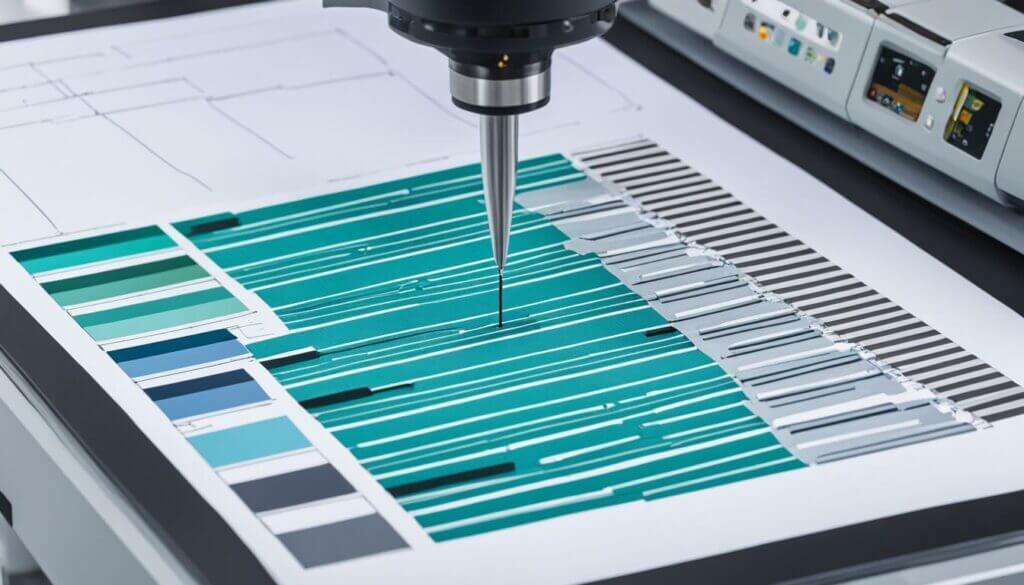
Additionally, clear quality specifications allow the production team to clearly understand quality requirements at each stage, thereby implementing silicone printing project standards one by one. For example, through detailed quality control charts, employees can perform daily inspections and optimization work by referencing specific operating guidelines. Such precise standardized operations ensure sustained stability and improvement of product quality.
First Article Inspection: A Critical Node in Product Production
In the manufacturing process of silicone products, first article inspection is an extremely critical step. It is an important quality control procedure in the early production stage, essential for ensuring the final product meets quality standards. This stage not only relates to the precision of silicone products but also directly impacts whether products can smoothly enter the mass production stage.
The quality inspection team performs rigorous testing on the first batch of samples produced, following established inspection specifications and procedures to ensure every production-critical indicator meets predetermined requirements. The table below shows common quality testing items and their standards in first article inspection:
| Inspection Item | Quality Standard | Testing Method | Notes |
|---|---|---|---|
| Dimensional Accuracy | ±0.1mm | Precision instrument measurement | Critical dimensions must be accurate |
| Hardness Test | Per product requirements | Shore hardness tester | Ensures elasticity and flexibility |
| Tensile Break Performance | Meets international standards | Tensile testing machine | Evaluates product durability |
| Appearance Inspection | No visible defects | Combined visual and microscopic inspection | Avoids color, bubble, and other issues |
It is worth noting that only when samples pass all these criteria will they be approved for subsequent mass production. This process not only demonstrates the critical position of first article inspection in silicone product production but also highlights its importance in maintaining final product consistency and quality standards.

Quality Control Methods During Production
In your silicone printing production process, comprehensive quality control is key to ensuring product quality meets industry standards. To this end, implementing precise sampling inspection methods is an indispensable step. From raw material selection to finished product shipment, every operation must strictly comply with regulations to stabilize product performance and extend service life.
During the production process, patrol inspectors play an important role. They are responsible for periodic sampling inspections of semi-finished products, focusing on appearance, dimensions, and important load-bearing indicators. Additionally, for any anomalies discovered during inspection, patrol inspectors quickly report to the production line supervisor for immediate adjustment or rework, enabling real-time correction of production deviations while maintaining product quality uniformity and stability.
The following table shows several common inspection items and corresponding tolerance ranges in quality control, helping you better understand production standards:
| Inspection Item | Tolerance Range | Inspection Focus |
|---|---|---|
| Appearance | ±0.05mm | Color deviation, bubbles, impurities |
| Dimensions | ±0.1mm | Length, width, height |
| Hardness | ±5 Shore A | Material elasticity |
Implementation of Comprehensive QC and QA Systems in Silicone Printing
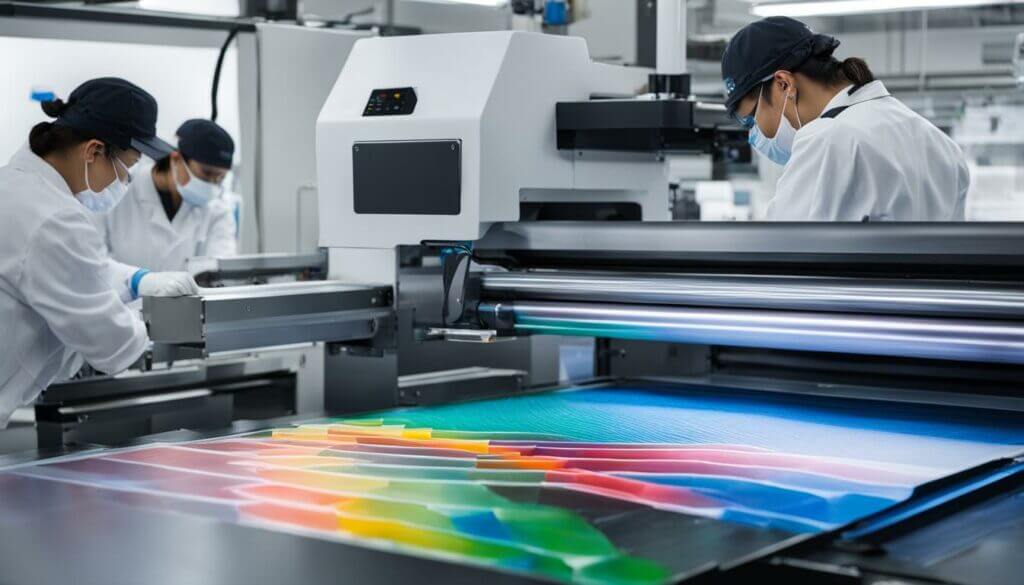
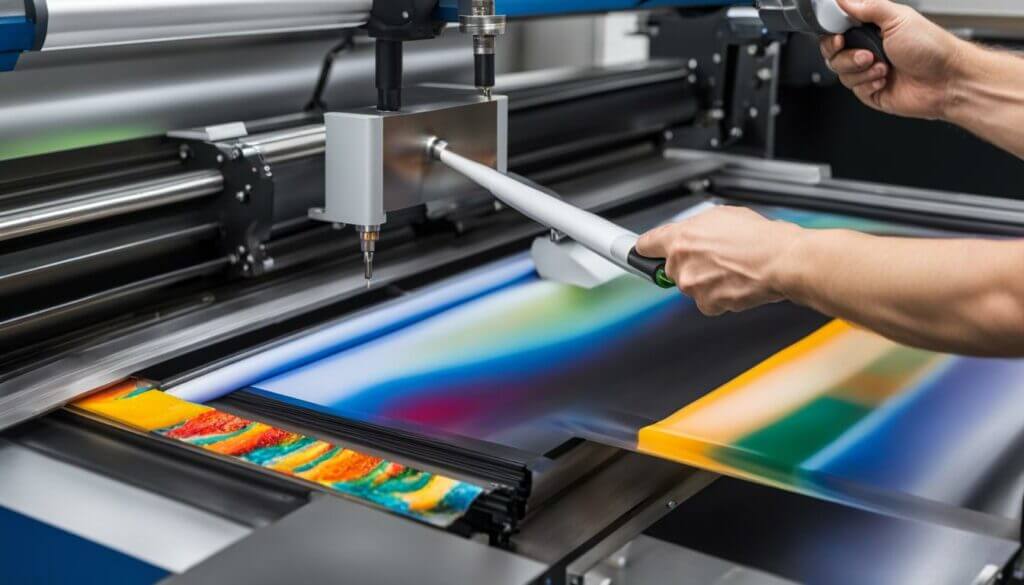
When exploring the solid foundation of the silicone printing industry, you will find that QC systems and QA systems are not only the core of quality management but also the key to maintaining product quality assurance. These systems encompass full-process monitoring from raw material inspection to finished product shipment, ensuring every stage meets high-standard specifications.
| Quality Control Stage | QC Inspection Points | QA Confirmation Activities |
|---|---|---|
| Raw Material Testing | Check silicone physical properties, color, and safety certification documents | Verify raw material compliance, confirm adherence to design specifications |
| Pre-Printing Preparation | Ensure printing machine settings are accurate | Review setting parameters for consistency with product design |
| Printing Process Monitoring | Real-time monitoring of print quality, random sampling inspections | Statistical monitoring data, analyze quality trends |
| Finished Product Inspection | Comprehensive inspection of finished product dimensions, function, and appearance | Conduct sampling verification based on AQL standards |
| Pre-Shipment Review | Verify product completeness and packaging standards | Final quality assurance approval, ensuring quality guarantee |
Through these meticulous quality control measures, we can be confident that every batch of silicone printing products upholds the high-quality standards that customers expect. Therefore, deeply understanding and implementing QC systems and QA systems not only improves your product quality but also builds a solid defense for your brand reputation.
How to Handle Quality Anomalies in Silicone Printing
When performing silicone printing, encountering quality anomalies is unavoidable, but having an effective set of handling methods can greatly reduce their impact on the production process. When you discover product anomalies, the first step is to identify and classify the problem. Once the root cause analysis is clear, immediately take corresponding measures for adjustment — this is the key to successful quality control.
Whether quality issues appear in semi-finished or finished products, rapid response is needed. Regarding the problem, it is not only necessary to resolve it on the production line in a timely manner but also to treat it as a long-term task, continuously tracking and optimizing handling methods to prevent the same situation from recurring. This is not just a short-term fix but rather continuous improvement of the entire production system.
Below is a quality anomaly handling process to help you establish a comprehensive quality control system:
| Anomaly Type | Possible Cause | Handling Method | Preventive Measures |
|---|---|---|---|
| Color Mismatch | Incorrect pigment ratio | Correct pigment formula | Strengthen incoming raw material inspection |
| Abnormal Hardness | Insufficient curing time | Adjust curing process | Regular machine maintenance |
| Unstable Dimensions | Mold wear | Replace or repair mold | Implement mold lifespan management |
| Print Misalignment | Printing machine positioning failure | Calibrate printing machine | Increase printing machine calibration frequency |
The Role of ISO Certification in Silicone Printing Quality Improvement
When you are on the path to quality improvement, ISO certification is an indispensable key element. Whether you operate a silicone printing enterprise or are a consumer of silicone products, you expect products to meet international standards for mutual recognition and trust in the global market. ISO certification, especially ISO 9001 and ISO 13485, establishes a clear framework for silicone printing quality management, guiding enterprises to build an efficient quality improvement mechanism.
By implementing ISO certification, enterprises can standardize their production processes, with every stage from raw material procurement to final product testing subject to rigorous monitoring. This not only ensures product consistency and reliability but also increases customer trust in the enterprise. Through this, international standards become a powerful tool for enterprises to expand their markets, helping them stand out in the competitive silicone printing industry.
| ISO Certification Type | Impact on Silicone Printing | Benefit Areas |
|---|---|---|
| ISO 9001 | Establishes comprehensive quality management system | Company efficiency improvement, increased market recognition |
| ISO 13485 | Quality management specifically for medical device sector | Product safety and performance enhancement |
| Other Related ISO Standards | Regulates processes and product quality for specific sectors | Targeted problem-solving, improved customer satisfaction |
Moreover, ISO certification also serves as a symbol of quality improvement in the industry, becoming a highlight for attracting investors and partners. Silicone printing factories that implement ISO certification can demonstrate their commitment to manufacturing high-standard products, thereby solidifying the enterprise's brand value and customer base.
Eco-Friendly Properties of Silicone Products and Market Competitiveness
When we discuss silicone products, we often think of their outstanding heat resistance, flexibility, and diverse application scenarios. However, an important aspect of silicone is its excellent eco-friendly properties, which have become a significant factor in enhancing its market competitiveness in today's global market. From the production process to end-use, the concept of sustainable development is woven throughout silicone products, prompting thorough consideration of eco-friendliness and reusability from the design and manufacturing stages.
According to the latest market research, consumer preference for eco-friendly products is becoming increasingly apparent, particularly when choosing everyday items such as kitchenware and baby products. Silicone's non-toxic, odorless, and chemical-resistant properties make its applications in medical devices, food-grade containers, and other fields highly trusted.
| Property | Silicone Products | Other Material Products |
|---|---|---|
| Heat Resistance | Excellent | General |
| Recyclability | Recyclable and reusable | Limited recyclability |
| Durability | Long lifespan | Requires regular replacement |
| Eco-Friendliness | Pollution-free production process | May produce pollution |
| Market Demand | High growth | Slow growth |
Looking at the data above, silicone products, with their important characteristics of being tough, durable, and environmentally burden-free, continue to see rising market demand driven by sustainable development trends. Whether from an ecological protection or long-term economic perspective, silicone products are a smart choice.
Raw Material and Finished Product Certification for Consumer Rights Protection
When purchasing silicone printing products, do you pay attention to their raw material certification and finished product certification? In fact, these certifications are a strong safeguard for your consumer rights. For example, with CoA (Certificate of Analysis), RoHS (Restriction of Hazardous Substances Directive), REACH (Registration, Evaluation, Authorization and Restriction of Chemicals), and UL (Underwriters Laboratories) certifications, you can rest assured that the silicone products in your hands are not only safe and reliable but also meet high international standards.
The table below is a certification reference guide for when you purchase silicone printing products, allowing you to instantly identify product quality assurance:
| Certification Type | Scope Covered | Meaning for Consumers |
|---|---|---|
| CoA | Raw material analysis certification | Ensures raw materials are pure and harmless |
| RoHS | Restriction of hazardous substance content | Reduces health risks |
| REACH | Management and control of chemical risks | Ensures safety during use |
| UL | Product safety certification | Product use is safe and worry-free |
In addition to the certifications listed above, consumer protection for silicone printing products can be further strengthened through the brand's own quality assurance system. Strict production supervision and product testing are what you, as a smart consumer, should look for.
Ultimately, remember that these certifications not only represent high-standard product quality but also demonstrate a company's responsibility to consumers. Next time you purchase, be sure to check for relevant certification marks.
Case Study: Success Stories in Silicone Printing Quality Management
When exploring quality management success stories, you may think of many industry exemplars, but let us focus on the leaders in the silicone printing field. These enterprises, through continuously refining their quality control processes, have not only ensured product consistency and compliance but have even exceeded customer expectations.
For example, a well-known medical device company implemented a thorough improvement plan for quality management of silicone button printing. This plan encompassed a series of control processes, from strict raw material procurement standards to real-time monitoring systems on the production line to comprehensive pre-shipment testing.
Below are the steps of successful quality management process implementation in silicone printing:
| Silicone Printing Quality Management Stage | Adjustments and Implementation | Effectiveness Assessment |
|---|---|---|
| Raw Material Procurement Standards | Established Certificate of Analysis (CoA) mechanism with suppliers | Improved raw material pass rate, reduced production line material waste |
| Production Line Quality Monitoring | Introduced automated quality tracking system for timely anomaly detection | Significantly improved product consistency, reduced rework rate |
| Finished Product Inspection Process | Enhanced product sampling and full inspection procedures per ISO standards | Dramatically reduced pre-shipment rejection rate, increased customer satisfaction |
Through careful planning and execution, this company's silicone printing product quality gained widespread market recognition, positively influencing the entire industry's quality control standards. These success stories are not only exemplars of quality management practice but also valuable case study resources for peers pursuing excellence.
Effective quality management concerns not only end products but also impacts corporate reputation and customer trust — it is the key to sustained growth in the silicone printing industry. The professional nature of silicone printing requires enterprises to continuously invest in quality control systems to maintain their lead in fierce market competition.
Conclusion
In today's era where quality and environmental protection are equally important, the silicone printing industry's pursuit of ultimate quality management has become standard practice. Comprehensive quality control processes — from rigorous incoming raw material inspection to finished product examination at every stage before shipment — ensure dual improvement in product precision and reliability. Implementing ISO certification and strengthening eco-friendly product standards enables enterprises to stand out in the competitive market and become industry leaders.
Reviewing our discussion, you can see a consistent theme: continuous improvement and innovation are the cornerstones supporting the elevation of industry standards. Whether through effective implementation of first article inspection, precise sampling methods during production, or rigorous criteria for final quality testing, we have emphasized the critical importance of rigorous management systems for product quality.
As a member of the silicone printing industry, your enterprise must grasp both quality and environmental protection as two sides of the same coin. This not only provides your customers with safer and more eco-friendly choices but also wins advantages for your brand's sustainable development on a global scale. Steadfastly executing these quality control strategies and using them to safeguard silicone printing product quality, you will build a solid foundation on the road of continuous progress, creating the future.